Head to head
BPC-157
vs TB-500.
The two most searched repair peptides, compared on the only thing that counts, which is evidence in people.
The short answer
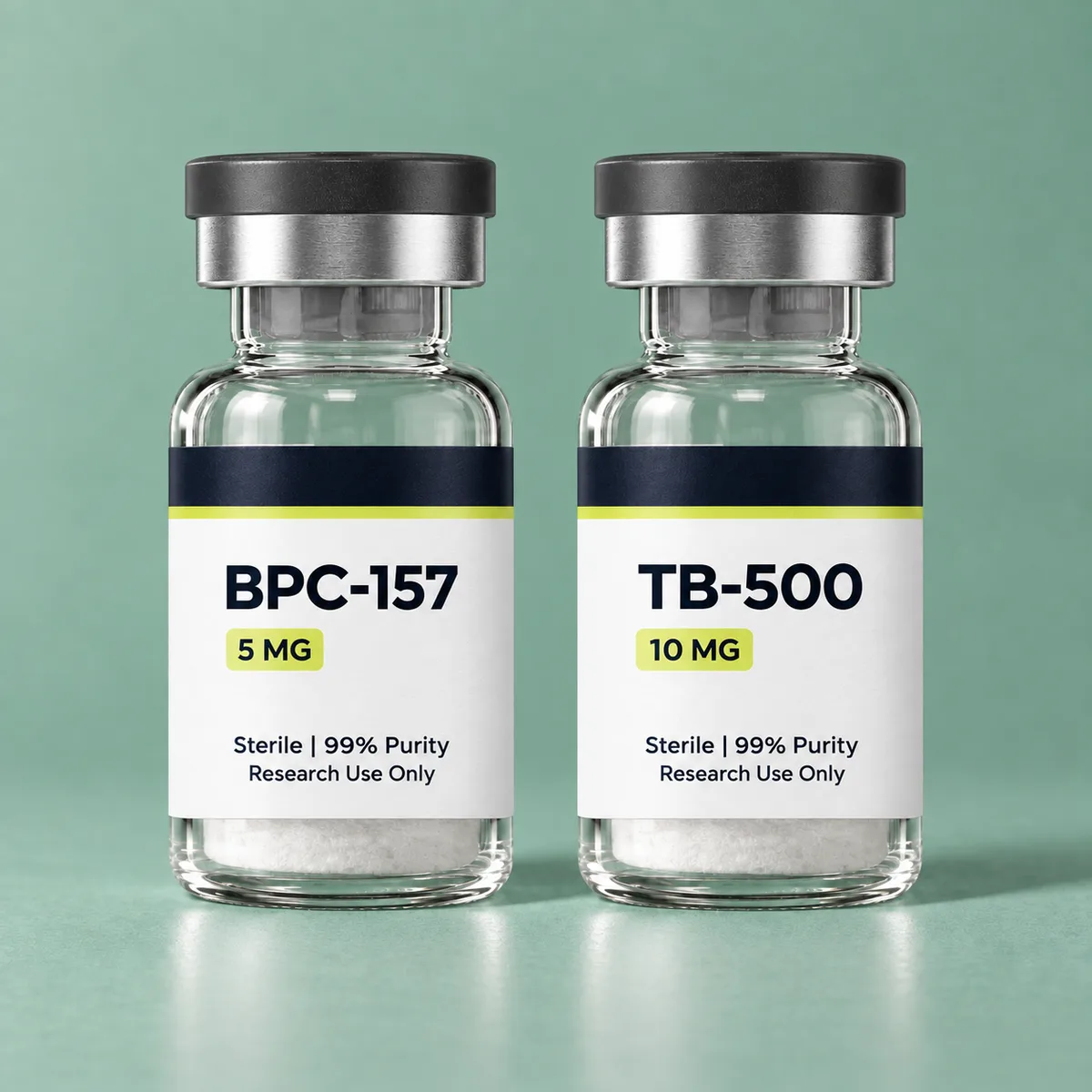
Neither one wins, because the contest was never held. BPC-157 and TB-500 both have animal healing data and neither has a completed, published randomized trial in humans. That single fact outranks every comparison chart on the internet, including the one further down this page.
What can be said fairly is where each one came from. BPC-157 is a synthetic sequence derived from a protein found in human gastric juice, with three decades of rodent work on tendon, muscle, bone, nerve and gut tissue, most of it from one research group. TB-500 is a synthetic fragment of thymosin beta-4, a natural actin-binding protein released at sites of injury, with animal repair data and human research on the parent protein in eye surface disease rather than on the injection sold to athletes. The FDA placed BPC-157 among bulk substances that may present significant safety risks in compounding. TB-500 has no lawful prescription route at all, and both are banned in tested sport.
| BPC-157 | TB-500 | |
|---|---|---|
| Mechanism | Gastric-derived peptide, new vessel growth in animals | Thymosin beta-4 fragment, binds actin, aids cell migration |
| Human evidence | None published, animal data only | None for the injection, some for the parent protein |
| What clinics use it for | Tendon and gut complaints, post-injury recovery | Muscle and soft tissue injury, systemic recovery |
| Typical protocol | 200 to 500 micrograms daily, four to eight weeks | 2 to 2.5 mg twice weekly loading, then maintenance |
| Side effects | Injection site irritation, nausea, headache, all anecdotal | Injection site reactions, fatigue, flu-like feeling |
| Monthly cost range | 100 to 250 dollars advertised | 150 to 300 dollars advertised |
| FDA status | Not approved, flagged for compounding | Not approved, no lawful route |
How each one works
The proposed mechanisms are genuinely different, which is why the two are so often discussed as partners rather than rivals. Animal work on BPC-157 points to new blood vessel formation through VEGF receptor signaling and to effects on the nitric oxide system, a local repair story centered on blood supply and on gut tissue, which is where the sequence was first identified.
TB-500 works upstream of that, at least in theory. Thymosin beta-4 is one of the most abundant actin-binding proteins in cells and is released where tissue is damaged, and its documented role is helping repair cells move into an injury site. The fragment sold as TB-500 is meant to carry that activity, which is also why it is dosed in milligrams twice weekly rather than in micrograms daily. Mixing up those units is the single most common and most dangerous mistake people make with these two vials.
What the evidence says
- BPC-157 in animals — rat studies report faster recovery of transected Achilles tendon and injured ligament, with better tensile strength than untreated controls, plus protection against ulcers and against damage from anti-inflammatory drugs. Those are animal outcomes on animal tissue.
- The replication problem — a large share of the BPC-157 literature comes from a single group in Croatia, and independent replication is thin. That matters when deciding how much weight the animal record can carry.
- TB-500 in animals — rodent work reports improved healing in heart, skin and muscle injury models with faster recruitment of repair cells. Much of the practical use history comes from horses, which is where doping attention began.
- Human research on the parent protein — thymosin beta-4 has been studied mainly as an eye drop for corneal surface disease. Those results say nothing about milligram doses injected under the skin for a torn hamstring.
- Neither compound — no published randomized human trial reports efficacy or safety for tendon, muscle or joint injury. Every before and after story online is uncontrolled, and injuries heal on their own.
The popular healing stack
Running both together is the most common protocol you will read about, and the logic behind it is the mechanism split above. One compound is described as improving local blood supply, the other as helping repair cells arrive, so the pairing looks complementary. Users typically describe BPC-157 daily in micrograms near the injured area alongside TB-500 twice weekly in milligrams.
Here is the part the forums skip. There is no human trial of either compound alone, so there is certainly no trial of the two together, no interaction data, and no safety monitoring of the combination in any population. Stacking two unapproved compounds does not average their risk, it adds two unregulated vials to the same body. Both also promote growth and new vessel formation in animal models, which makes the combination a particularly poor fit for anyone with a cancer history.
Cost and legal reality
Advertised pricing sits near 100 to 250 dollars per month for BPC-157 and 150 to 300 dollars for TB-500, with combined stacks marketed higher. Those are vendor and clinic numbers, not a regulated price.
Neither compound is an approved drug in the United States. BPC-157 was placed in the FDA category of bulk substances that may present significant safety risks, which effectively closes the door for licensed compounding pharmacies, and the FDA has stated it does not meet the definition of a dietary ingredient, so capsules sold as supplements are outside the rules. TB-500 has no approval and no accepted medical use, so there is no lawful prescription route to it at all. Most vials of either carry a research use only label, which is a legal disclaimer rather than a quality standard. Independent testing of gray-market peptide vials has repeatedly found wrong doses, impurities and contamination, and that is the concrete hazard.
Which one the doctor picks
Often neither, and that answer is worth more than a ranking. A physician starts with what is actually torn, inflamed or degenerating, orders imaging when it is warranted, and works through the options that carry evidence, from a proper rehabilitation protocol to approved injections and, where it applies, surgery. Peptides enter that conversation only if there is a lawful product and a reason to expect benefit, and the doctor should be able to say plainly which part of your plan is supported by human data and which part is not. Screening also catches the reasons a growth-promoting compound would be the wrong idea for you, which no vendor will ever do.
Questions people ask
Which is better, BPC-157 or TB 500?
How long does it take for BPC-157 and TB-500 to work?
How long can you stay on BPC-157 and TB-500?
Does TB-500 raise testosterone?
Sources: PubMed — BPC-157 literature · PubMed — thymosin beta-4 literature · FDA — bulk substances safety list · USADA on BPC-157