Peptide guide
CJC-1295.
Real effects.
It reliably raises growth hormone in humans. Whether that changes how you look or feel is a separate question the research never answered.
The short answer
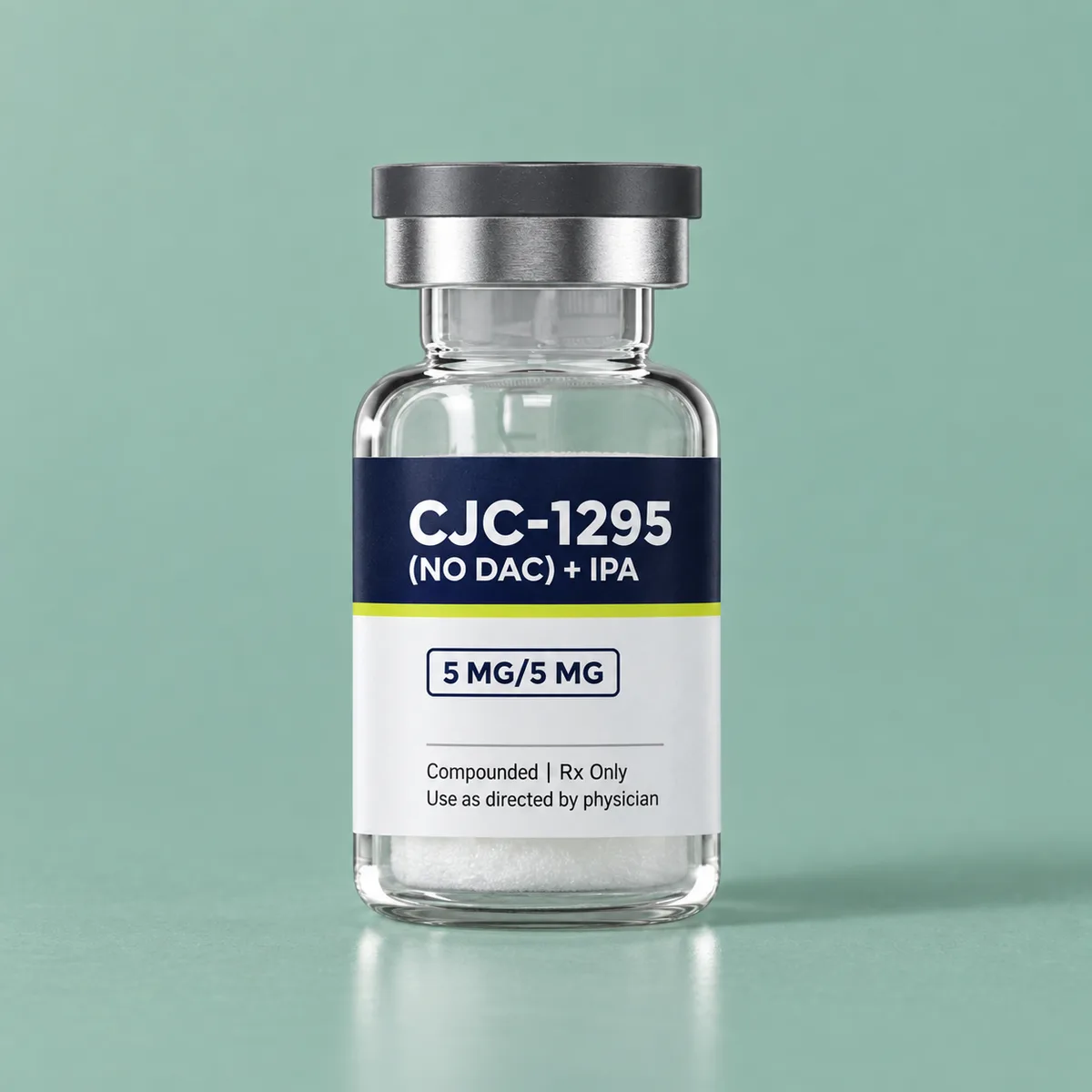
CJC-1295 is a modified version of growth hormone releasing hormone, redesigned so it survives in the bloodstream far longer than the natural signal. Human studies in healthy adults showed that it does exactly what it was built to do, raising growth hormone and IGF-1 for days after a single injection. What was never demonstrated is a benefit a person can feel or measure in the mirror. It was never approved, development did not continue, and it remains a research compound.
What the research shows
- Two different molecules share the name — the long-acting form carries a drug affinity complex that binds to albumin and keeps it circulating for days. The short form, correctly called modified GRF 1-29, clears in well under an hour. Vendors label both as CJC-1295, which is the first thing to check before dosing anything.
- Published human studies — dose-ranging work in healthy adults found sustained increases in growth hormone and IGF-1, with IGF-1 staying elevated for days to more than a week at higher doses. These are blood measurements in volunteers, and they are the strongest evidence this compound has.
- What was not measured — no adequate trial tracked lean mass, fat mass, strength, injury recovery or how patients felt. Claims about body composition are inferred from what growth hormone does, not from testing this drug.
- Pulses versus a plateau — natural growth hormone arrives in sharp bursts, mostly at night. The long-acting form replaces that rhythm with a steady elevation, and endocrinologists treat that difference as an open safety question rather than a feature.
- Development stopped — the compound went through early clinical work and never reached approval anywhere. Everything sold today is made for the research market.
Dosing in practice
A physician sets any dose. The numbers below are the ranges described in published studies and in clinic protocols, included so the units make sense to you.
The short-acting form is typically described at around 100 micrograms subcutaneously before bed, often paired with a ghrelin-type secretagogue such as ipamorelin, five nights a week so the hormone axis is not pushed continuously. The long-acting form is described in milligrams, roughly 1 to 2 milligrams once weekly, because a single dose keeps working for days. IGF-1 bloodwork before starting and after a few weeks is the only objective way anyone checks whether a protocol is doing anything.
Side effects and risks
- Most common in practice — water retention and puffiness, tingling or numbness in the hands, joint aches, and injection site redness. These are the classic signs of pushing growth hormone too hard.
- Blood sugar — growth hormone works against insulin, so higher doses can nudge glucose upward, which matters for anyone with prediabetes or diabetes.
- Sustained IGF-1 elevation — long-term consequences in healthy adults have not been studied, and raising a growth signal is inappropriate for anyone with a cancer history.
- Product quality — unregulated vials vary in strength and purity, and mislabeling between the long and short forms leads to accidental overdosing by a wide margin.
- Sport — growth hormone secretagogues are prohibited at all times under the World Anti-Doping Agency list.
Legal and FDA status
CJC-1295 is not approved by the FDA for any indication and is not a recognized dietary ingredient. In the agency review of peptides nominated for pharmacy compounding, members of this family, ipamorelin among them, were placed in the category of bulk substances that may present significant safety risks, and licensed US compounding pharmacies have pulled back from the class as a result. What remains in circulation is sold with a research use only label, which describes the seller's legal position and says nothing about what is in the vial.
How people get it legally
If the goal is more growth hormone activity, the legitimate conversation starts with whether you are actually deficient, which requires testing rather than a symptom list. A licensed physician can order IGF-1 and the stimulation testing that diagnosis requires, review why you are tired or not recovering, and treat the cause. Where a growth hormone medicine is genuinely indicated, approved products exist and are prescribed under monitoring. That path is slower than ordering a vial and it is the one that can be defended.
Questions people ask
What does CJC-1295 actually do?
Does CJC-1295 help with weight loss?
Does CJC-1295 suppress testosterone?
What are the downsides of CJC-1295?
How long does it take to see results from CJC-1295?
Sources: PubMed — CJC-1295 studies · FDA — bulk substances safety list · WADA Prohibited List · PubMed — GHRH analog research