Safety guide
Are peptides
actually safe?
The honest answer is: it depends entirely on which peptide, from what source, with what oversight. Here is the full picture.
Three safety categories
The word peptide covers FDA-approved medicines, pharmacy-compounded prescriptions and gray-market research chemicals. Their safety profiles have almost nothing in common.
Approved medicines have controlled trials, known side effects and dosing rules. Compounded prescriptions have physician oversight and pharmacy quality standards, but the compound itself may lack big trials. Research chemicals have neither — the FDA has specifically flagged several popular ones, including BPC-157, as presenting safety risks when compounded.
The real risk is the vial
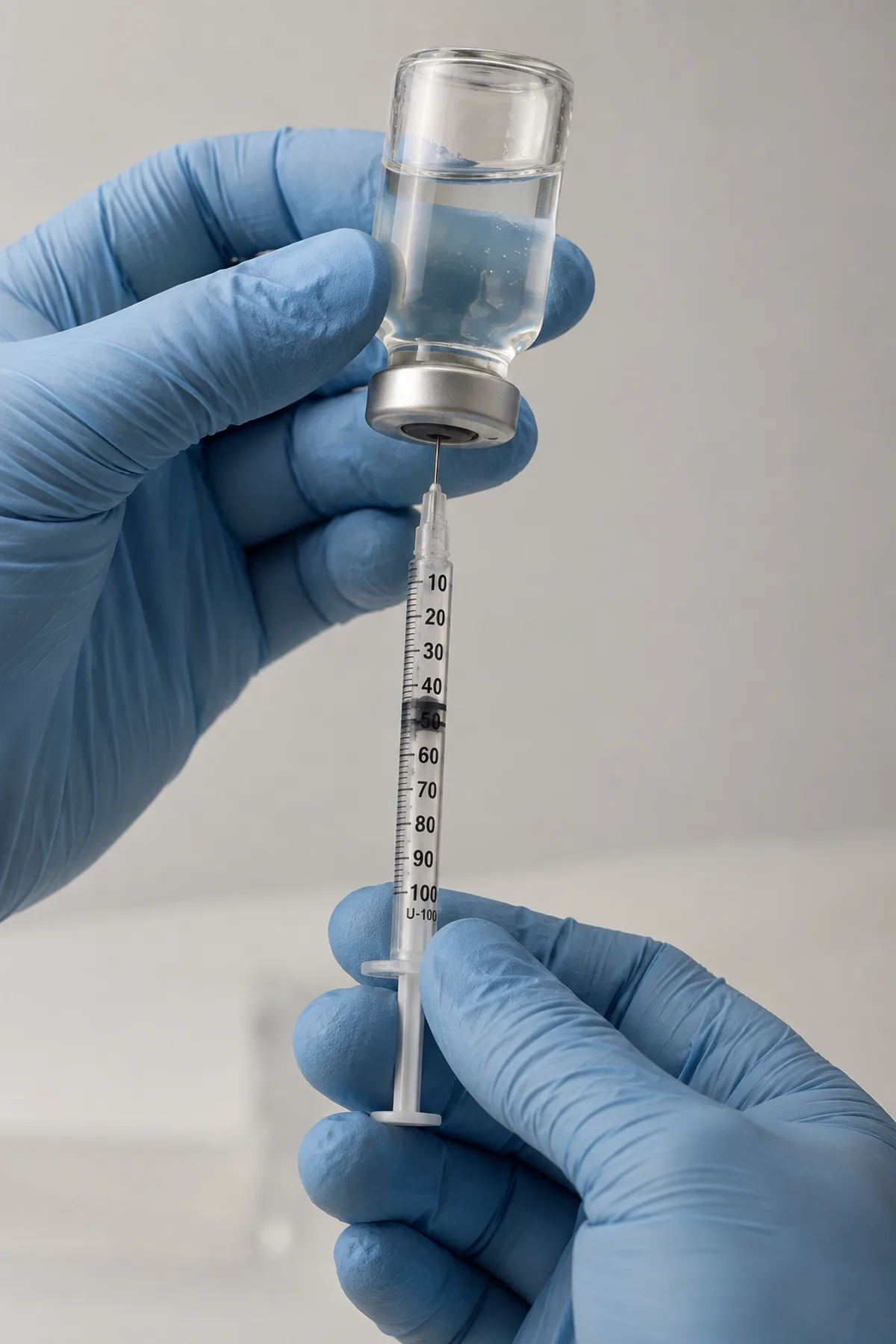
Independent testing of gray-market peptide products has repeatedly found wrong doses, impurities and bacterial contamination. When a product is sold for research purposes only, no one certifies what is actually in it, and an injected impurity is a much bigger problem than a swallowed one. This — not the molecule — is the largest real-world risk for most users.
Known side effects
- GLP-1 medicines — nausea, vomiting, constipation; rare pancreatitis; muscle loss without training; thyroid C-cell warnings from rodent data.
- Growth hormone secretagogues — water retention, tingling, increased hunger with some; theoretical concern with raising IGF-1 long term, which is why screening matters.
- BPC-157 and TB-500 — human safety data is close to nonexistent. Animal studies look benign; that is not the same as safe in people.
- PT-141 — nausea in up to 40 percent of users, flushing, temporary blood pressure rise; the approved form carries its own label.
Who should skip peptides
- Anyone with active or recent cancer — growth-promoting pathways are the concern
- Pregnant or breastfeeding women
- People with personal or family history of medullary thyroid carcinoma, for GLP-1s
- Tested athletes — most peptides on this site are WADA-banned
How to remove the risk
- Get bloodwork and a physician assessment first
- Use only prescriptions filled by a licensed US pharmacy
- Start at the lowest protocol dose and titrate
- Report side effects to your medical team immediately
See what legitimate care looks like
Questions people ask
What is the safest peptide to take?
Why don't doctors like peptides?
Are peptides safer than steroids?
Will peptides fail a drug test?
Sources: FDA — bulk substances safety list · USADA on BPC-157 · Harvard Health on peptides · AMA — injectable peptides