Peptide guide
PT-141, the
desire peptide.
This is one of the few peptides on this site that cleared phase 3 trials and carries an FDA-approved label, which makes the honest discussion a different one.
The short answer
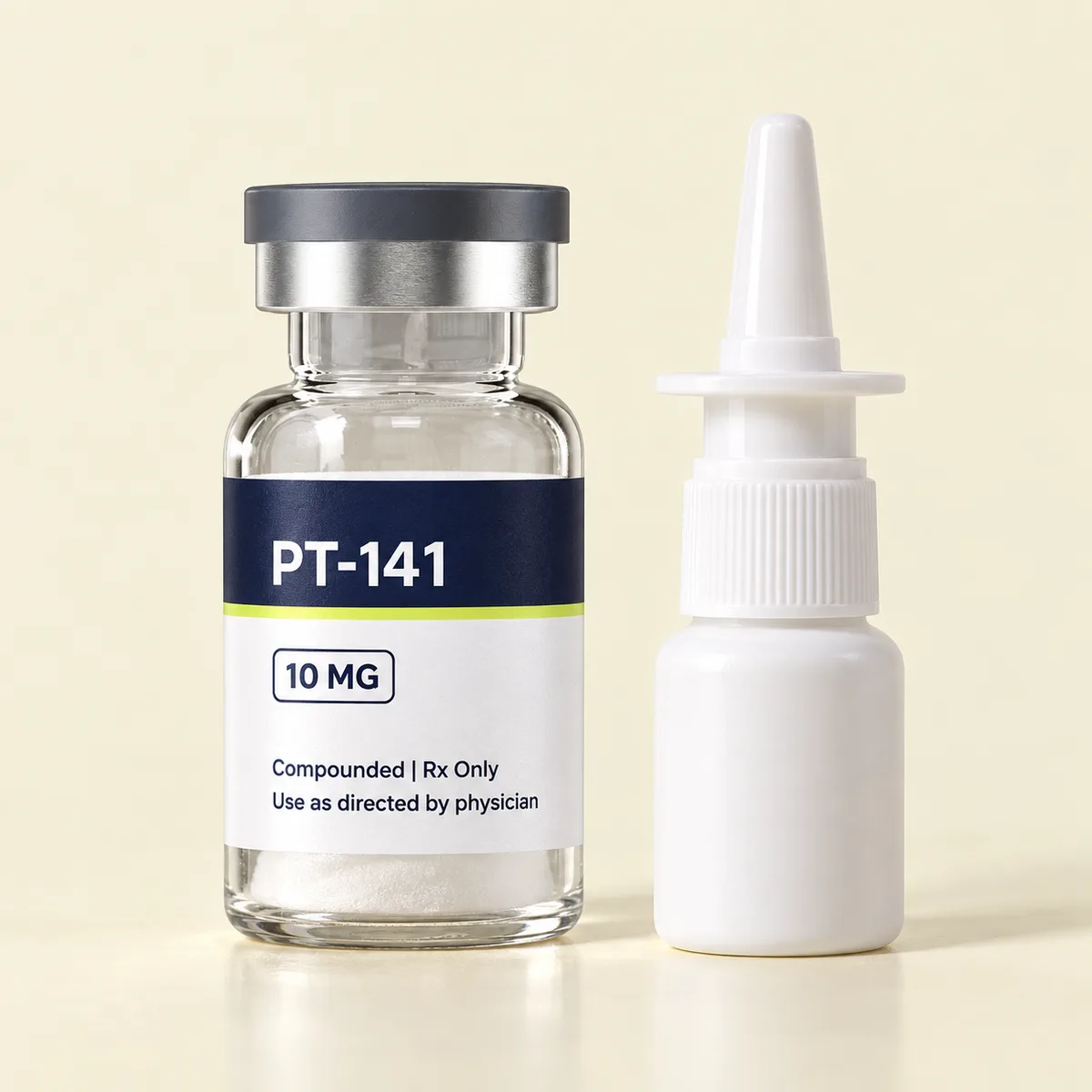
PT-141 is bremelanotide, and it is a genuinely approved medicine — the FDA cleared it in 2019 as Vyleesi for acquired generalized hypoactive sexual desire disorder in premenopausal women. The phase 3 results were statistically real but modest in size, and the most common experience with it is nausea. Everything outside that narrow approved population, including all use by men and every compounded nasal spray, is off-label and much less well studied.
What the research shows
- It passed phase 3. Two identically designed randomized trials in premenopausal women with acquired generalized low sexual desire compared on-demand bremelanotide against placebo. Both showed statistically significant improvements in desire scores and in the distress women felt about low desire.
- The effect size is modest. The improvements were real but small in absolute terms, and the placebo response in this field is substantial. It is a treatment worth trying for the right patient, not a switch that restores libido on command.
- The mechanism is central, not vascular. Bremelanotide activates melanocortin receptors in the brain, mainly MC4R, on pathways involved in sexual motivation. PDE5 inhibitors such as sildenafil work on blood vessels instead, which is why the two are not interchangeable.
- It grew out of a tanning peptide program. Bremelanotide is a metabolite of melanotan II, which explains the shared side effect of skin darkening and why melanocortin receptors are involved at all.
- The nasal route was abandoned. An intranasal version was developed first and its clinical program was halted in the 2000s after blood pressure increases were seen. The injectable form with a defined dose is what eventually reached approval.
- Male use is off-label. Early studies in men with erectile dysfunction existed, but no bremelanotide product is approved for men, so male use rests on older trial data and clinical experience rather than an approved indication.
Dosing in practice
A physician sets the dose, and with this one the approved label is unusually clear about limits.
- The approved dose is 1.75 mg subcutaneously, delivered by autoinjector into the thigh or abdomen
- It is taken at least 45 minutes before anticipated sexual activity
- No more than one dose in 24 hours and no more than eight doses in a month
- Compounded versions sold in lower fractional doses exist, but they are not the studied product and are not dose-verified
Side effects and risks
- Nausea is the headline. In the trials it affected up to roughly 40 percent of patients, most often after the first dose, and it is the main reason people stop. Vomiting occurred in a smaller share.
- Blood pressure rises transiently. The label describes a temporary increase in blood pressure with a matching decrease in heart rate after dosing, which is why it is not for people with uncontrolled hypertension or known cardiovascular disease.
- Focal hyperpigmentation. Patches of darker skin can appear on the face, gums or breasts. Risk goes up with more frequent dosing and in people with darker skin, and it does not always fully resolve after stopping.
- Common and milder — flushing, headache, injection site reactions, fatigue
- Not for pregnancy — the label advises pregnancy testing considerations and discontinuation if pregnancy occurs
Legal and FDA status
Bremelanotide is a prescription drug. As Vyleesi it is approved for acquired generalized hypoactive sexual desire disorder in premenopausal women, and it is a legitimate pharmacy product with a real label. Prescribing it to men or to postmenopausal women is off-label, which is legal for a physician but means less evidence stands behind it. Vials sold online as research chemicals are a different matter entirely — they are unapproved products sold outside the prescription system.
How people get it legally
Start with the actual problem. Low desire has medical, hormonal, relational and medication-related causes, and a clinician who works through those will often find something more useful than a peptide. If bremelanotide fits, it is prescribed and filled by a pharmacy, with blood pressure and cardiovascular history checked first. That is also the only version where you know how much drug is in the device.
Questions people ask
What does peptide PT-141 do?
Is PT-141 better than Viagra?
How long does PT-141 take to kick in?
Is PT-141 nasal spray safe?
Do you take PT-141 every day?
Sources: FDA — Vyleesi approval announcement · DailyMed — Vyleesi prescribing information · PubMed — phase 3 bremelanotide trials · PubMed — bremelanotide and blood pressure