Peptide guide
Sermorelin.
The real story.
It was a real FDA-approved drug, it left the market for business reasons, and today it lives almost entirely inside compounding pharmacies.
The short answer
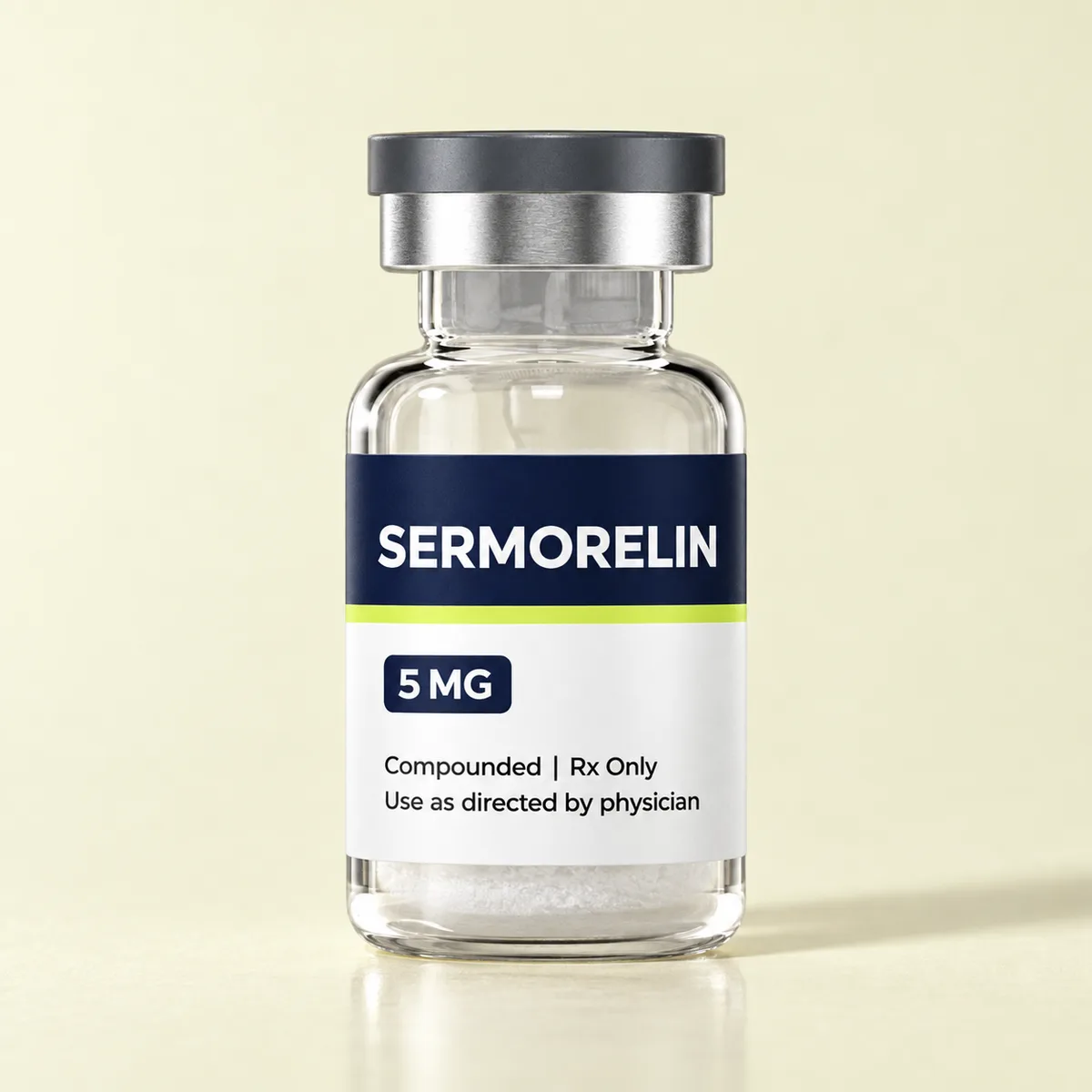
Sermorelin is a shortened copy of your own growth hormone releasing hormone, and it reliably makes the pituitary release growth hormone — that part is well established and was the basis of an approved product. What is far weaker is the modern adult evidence for the reasons people actually buy it, such as fat loss, sleep quality and anti-aging. Expect a real hormonal effect and modest, slow changes rather than the results marketed by clinics.
What the research shows
- It was an approved medicine. Sermorelin was sold in the US as Geref for pediatric growth hormone deficiency and as a diagnostic agent for testing pituitary reserve. It was discontinued in the 2000s, and the discontinuation was a commercial decision rather than a safety or effectiveness withdrawal.
- The mechanism is not in doubt. Sermorelin is the first 29 amino acids of GHRH, the active portion of the molecule. It binds pituitary GHRH receptors and triggers growth hormone release, which is exactly why it worked as a diagnostic test.
- Pulses, not replacement. Unlike injected growth hormone, sermorelin works through the gland itself, so the normal negative feedback loop stays intact. That is a genuine safety advantage of the approach, not proof of benefit.
- Adult outcome data is the weak link. Studies in adults are older, small, or focused on hormone levels rather than on how people look and feel. There is no large modern randomized trial showing meaningful fat loss, muscle gain or longevity benefit in healthy adults.
- Effects are dose and sleep dependent. Sermorelin has a very short half-life of roughly ten to fifteen minutes, which is why it is dosed at night to ride the body's own largest growth hormone pulse.
Dosing in practice
A physician sets the dose. The numbers below are what appear in clinical practice and in the older literature, not a protocol to copy.
- Reported adult doses cluster around 0.1 to 0.5 mg subcutaneously before bed
- Many clinics use five nights on and two nights off to mimic natural variation
- Courses typically run three to six months with IGF-1 checked before and during
- Vials arrive as powder and must be reconstituted, which is where most dosing errors happen
Side effects and risks
- Common and local — redness, itching, swelling or pain at the injection site
- Systemic but usually mild — flushing, headache, dizziness, nausea, a metallic taste
- From raising growth hormone — fluid retention, joint aches, tingling in the hands, and in susceptible people a drift toward higher blood sugar
- Who should avoid it — anyone with active or recent cancer, since growth pathways are the concern, plus pregnant and breastfeeding women
- Tested athletes — growth hormone secretagogues are prohibited by WADA at all times and laboratories test for them
Legal and FDA status
Sermorelin is a prescription drug in the United States. No brand-name product is currently marketed, so legitimate access runs through compounding pharmacies that prepare it for a named patient on a physician's order. It is not a dietary supplement, and it cannot legally be sold to consumers for personal use. Vials advertised online for research purposes only sit outside that system, with no one accountable for purity or dose.
How people get it legally
The path is unglamorous and short. A licensed clinician reviews your history, symptoms and bloodwork, decides whether a growth hormone secretagogue is reasonable for you at all, and writes a prescription that a US pharmacy fills. Follow-up labs confirm whether IGF-1 moved and whether anything needs adjusting. Everything else on the internet is a shortcut around the only step that protects you.
Questions people ask
What are the downsides of taking sermorelin?
What does sermorelin do to the body?
Is sermorelin like Ozempic?
What is the best thing to stack with sermorelin?
What does sermorelin do to your face?
Sources: PubMed — sermorelin literature · Drugs at FDA — approval records · FDA — compounding safety risks · PubMed — GHRH analogs in adults