Cost guide
Peptide therapy.
Real costs.
What clinics actually advertise in the United States, what sits on top of the sticker price, and how to tell a real quote from a hook.
The short answer
Most people pay a monthly subscription to a telehealth clinic that bundles a physician visit, a prescription and a compounded vial shipped to the door. Everything below is the range of prices advertised publicly by US clinics and pharmacies, not a quote and not a promise. Peptide pricing moves fast, so treat these numbers as a map of the landscape you will be walking into.
What a month costs
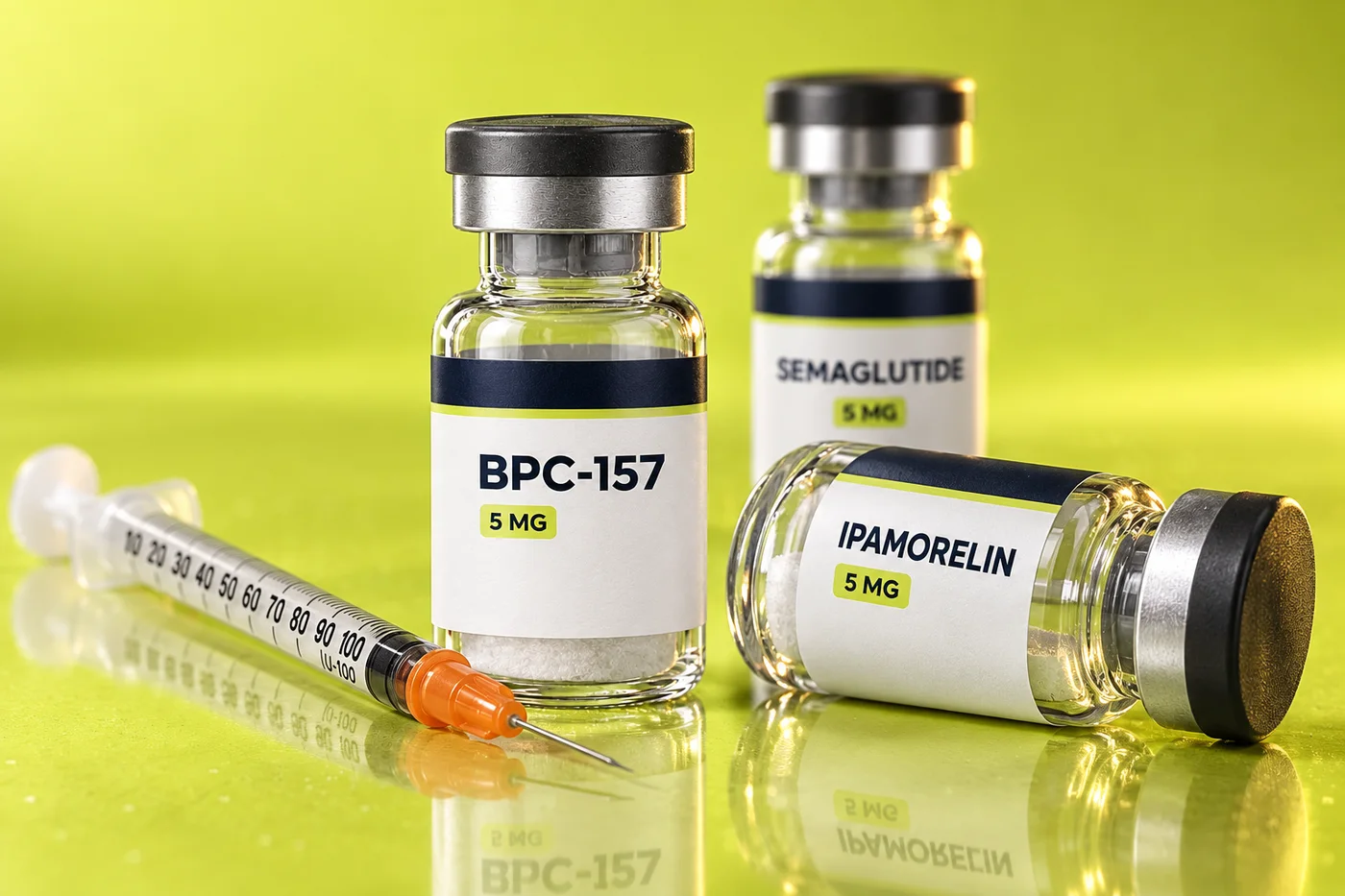
- Growth hormone peptides — sermorelin, ipamorelin and CJC-1295 blends are the cheapest tier, typically advertised at 150 to 350 dollars a month through telehealth. The spread inside that range comes from dose, vial size and which pharmacy compounds it.
- Compounded GLP-1 programs — semaglutide and tirzepatide prepared by a compounding pharmacy are typically advertised at 200 to 400 dollars a month, usually stepping up as the dose escalates.
- Brand-name Wegovy or Zepbound — without insurance the advertised cash price is roughly 1000 to 1350 dollars a month. Manufacturer savings programs and direct-to-patient pharmacy channels routinely bring that down a lot, so the list price is rarely the number people actually pay.
- In-person longevity clinics — as a rule they charge more than telehealth for the same molecule, because you are also paying for the building, the staff and the in-person visit. Membership fees on top of the prescription are common.
- Consultation and labs — often billed separately from the monthly price. Initial bloodwork commonly runs 100 to 300 dollars, and follow-up panels repeat during the course.
What drives the price
- The molecule itself. A brand-name approved drug with patent protection and completed trials behind it costs several times what a compounded peptide costs. That gap is regulatory and commercial, not a quality verdict on either one.
- Your dose. Peptides are priced by milligrams in the vial. A titration schedule that doubles the dose usually raises the monthly bill, and quotes based on a starting dose can look cheaper than the course will be.
- The pharmacy. A 503B outsourcing facility works at larger scale than a 503A pharmacy compounding for one named patient, and that shows up in the price.
- How much medicine is around it. A program with real lab work, dose adjustments and a clinician who answers messages costs more than a checkout button, and it should.
- Delivery format. Multi-dose vials are cheaper per milligram than prefilled pens or single-use syringes, which are easier to use and priced accordingly.
- Length of commitment. Quarterly prepay is usually discounted against month to month, which is only a saving if the therapy turns out to be right for you.
How to not overpay
- Get the full monthly price in writing before checkout, including shipping
- Ask which pharmacy fills it and confirm the pharmacy is named, not anonymous
- Ask what the price becomes at the higher doses later in the protocol
- Confirm labs and consult fees separately instead of assuming they are included
- Check that you can cancel any time without a penalty or a locked term
- Compare telehealth against a local clinic before signing a membership
What a real quote shows
A trustworthy quote is boring. It states the full monthly price before you enter a card, it names the licensed US pharmacy that will fill the prescription, it separates the consult and lab fees from the medicine, and it lets you cancel any time. A quote that hides the number behind a questionnaire, refuses to name the pharmacy, or sells a twelve month package before a physician has seen your bloodwork is selling a subscription rather than treatment.
Price also is not the decision. Whether any of this belongs in your plan is a medical judgment made by a licensed physician who has looked at your labs and your history. The cheapest protocol you do not need is the most expensive one on this page.
Questions people ask
How much do 3 months of peptides cost?
Are peptide injections worth it?
How much does peptide therapy cost?
What are the side effects of peptide injections?
Is peptide therapy covered by insurance?
Sources: FDA — compounding questions and answers · FDA on compounded GLP-1s · Drugs at FDA — approval records · PubMed — cost effectiveness literature