Peptide guide
Ipamorelin.
A careful review.
The cleanest of the growth hormone secretagogues on paper, and still a compound that never earned an approval.
The short answer
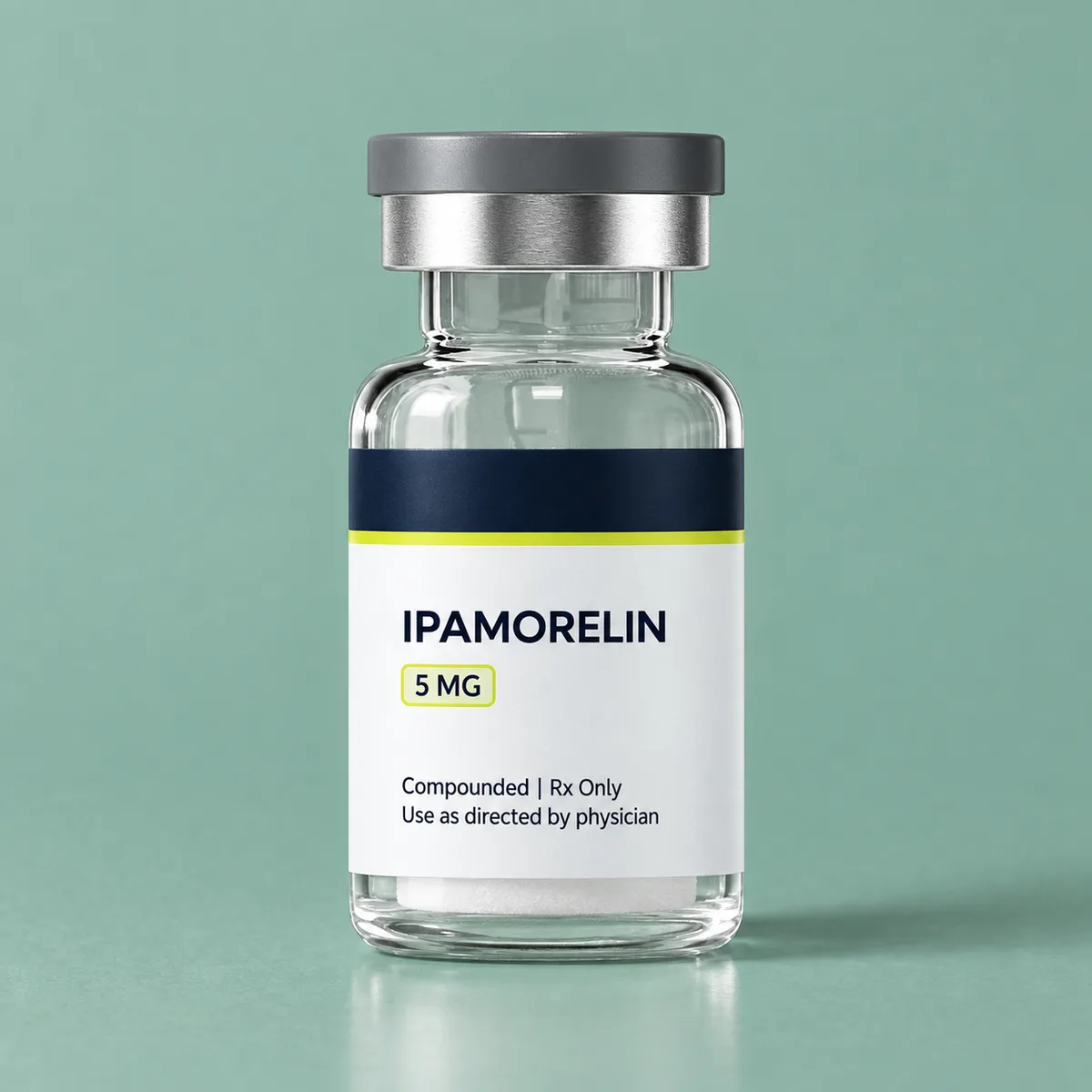
Ipamorelin was designed in pharmaceutical research as a selective growth hormone secretagogue, and selectivity is its genuine advantage. It triggers a growth hormone pulse through the ghrelin receptor without the large cortisol and prolactin rises that made earlier compounds in its class unattractive. It reached human clinical trials, aimed at gut motility after surgery rather than anti-aging, and it never reached approval. The FDA later placed it in category 2 of its review of substances used in pharmacy compounding, the group judged to present significant safety risks.
What the research shows
- Selectivity is real — the founding pharmacology work showed a clean growth hormone release with little effect on cortisol, prolactin and ACTH. That is the finding the whole reputation rests on, and it holds up.
- It was tested in people — clinical development targeted slow gut function after abdominal surgery. The program did not produce an approved medicine, which is the plain reading of how it ended.
- Nothing was tested for the uses it is sold for — no controlled trial examined ipamorelin for body composition, aging, sleep quality, injury recovery or energy in healthy adults.
- Combination protocols are untested too — pairing it with a GHRH analog such as CJC-1295 is standard in clinics because the two signals amplify each other in theory. No trial has evaluated the combination for safety or benefit.
- Appetite — because it works through the ghrelin receptor, hunger can increase, though less than with older compounds in the class. Worth knowing if the goal was fat loss.
Dosing in practice
A physician sets the dose and decides whether treatment is appropriate at all. The ranges here are the ones reported in research and clinical practice, given so you can read a protocol.
Protocols usually describe 200 to 300 micrograms subcutaneously at bedtime, on an empty stomach so food does not blunt the pulse, sometimes divided into two or three doses across the day. Courses are typically run for eight to twelve weeks with a break, on the reasoning that a hormone axis should not be pushed indefinitely. Vials come as powder and need reconstitution, and microgram doses translate into very small syringe markings, which is where mistakes happen.
Side effects and risks
- Reported most often — water retention, headache, lightheadedness after dosing, injection site redness, and increased appetite.
- Growth hormone overshoot — tingling or numb hands, joint stiffness and swelling are the signals that a dose is too high.
- Blood sugar — growth hormone opposes insulin, so glucose and insulin resistance deserve monitoring in anyone already at risk.
- Cancer history — stimulating a growth pathway is the wrong move for anyone with active or recent malignancy, and that call belongs to a physician with your records.
- Sport — growth hormone secretagogues are prohibited at all times under the World Anti-Doping Agency list.
Legal and FDA status
Ipamorelin is not an FDA-approved drug and is not a lawful dietary ingredient. Because the FDA assigned it to category 2 in the bulk substances review, licensed 503A compounding pharmacies should not be preparing it, and many clinics that once offered it moved patients to sermorelin or stopped entirely. Product sold online with a research use only label sits outside the medical supply chain, with no guarantee of identity, strength or sterility.
How people get it legally
The lawful route is not a vendor, it is a diagnosis. A licensed physician can test IGF-1, look for a real reason behind poor sleep, stalled recovery or low energy, and treat what the workup finds. If a growth hormone pathway medicine is warranted, sermorelin remains prescribable through a compounding pharmacy and approved growth hormone products exist for diagnosed deficiency. Getting that assessment first is what separates a treatment plan from an experiment.
Questions people ask
What does ipamorelin do for you?
Which is safer, ipamorelin or sermorelin?
What are the risks of taking ipamorelin?
Does ipamorelin reduce belly fat?
How quickly do you see results from ipamorelin?
Sources: PubMed — ipamorelin research · FDA — bulk substances safety list · ClinicalTrials.gov — ipamorelin trials · WADA Prohibited List