Peptide guide
TB-500.
Data, not hype.
A thymosin beta-4 fragment with real laboratory science behind it and almost no human trial record.
The short answer
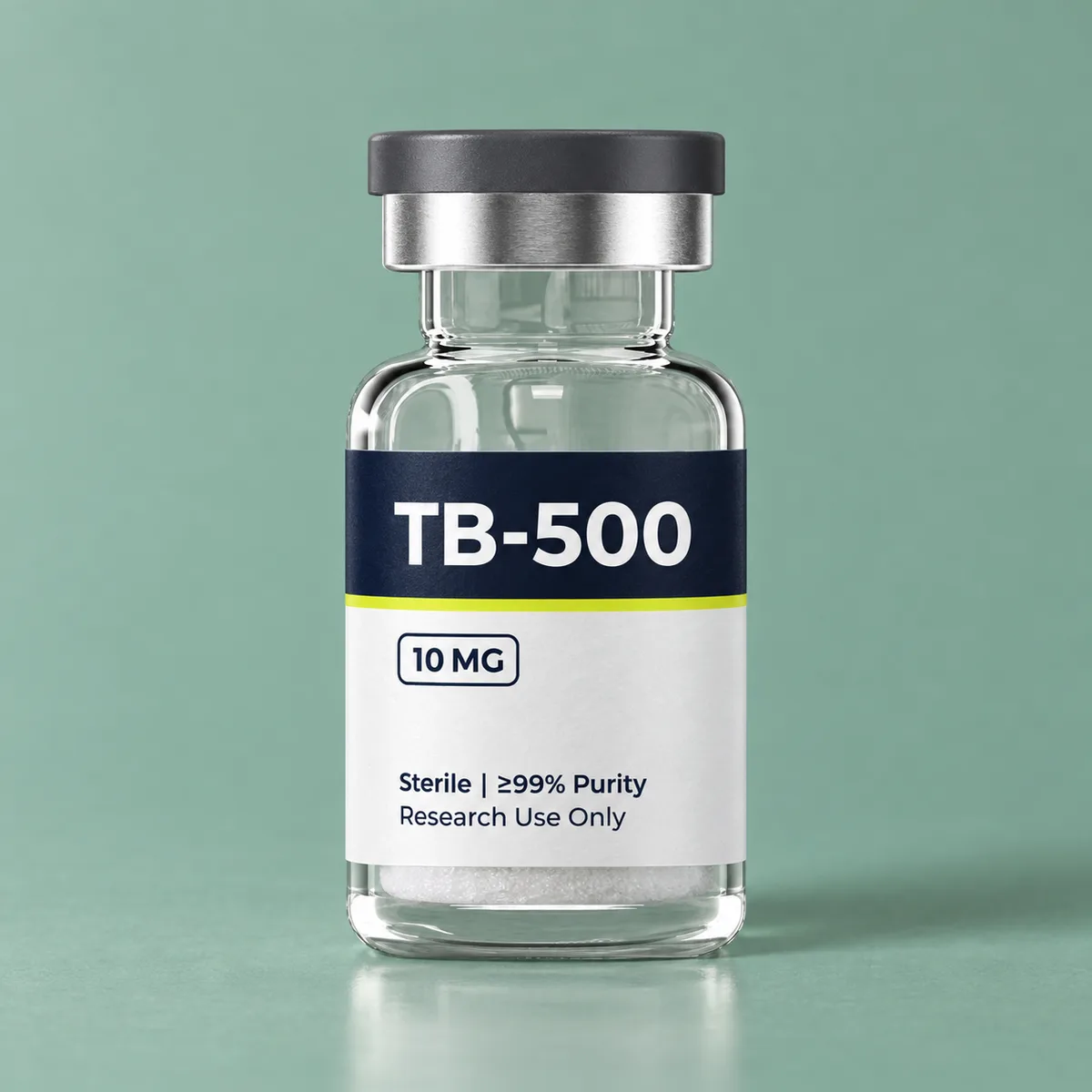
TB-500 is a synthetic peptide built from the active region of thymosin beta-4, a natural protein that binds actin and helps cells migrate into damaged tissue. The parent protein has a legitimate research record, including human studies of eye surface healing. The injectable product sold to athletes and gym users under the name TB-500 has never been tested in an adequate human trial, is not approved by the FDA, and is banned in sport at all times.
What the research shows
- The parent protein — thymosin beta-4 is one of the most abundant actin-binding proteins in cells and is released at sites of injury. Its role in cell movement and wound repair is established laboratory biology, not a fringe idea.
- Human studies exist, but not of the injection — thymosin beta-4 has been carried into clinical research mainly as an eye drop for corneal surface disease and in early wound healing work. Those results say nothing about milligram doses injected under the skin for a torn hamstring.
- Animal repair models — rodent work reports improved healing in heart, skin and muscle injury models, with faster recruitment of repair cells into damaged tissue. Animal healing data has a long history of not translating.
- Racing and veterinary use — much of the practical use history comes from horses, which is where the compound first drew doping attention.
- What is missing — no published randomized human trial of TB-500 for tendon, muscle or joint injury. Every before and after story circulating online is uncontrolled.
Dosing in practice
A physician decides whether anything should be dosed at all. The ranges below are those reported in practice and in product literature, given for orientation rather than as guidance.
Protocols usually describe a loading phase of roughly 2 to 2.5 milligrams twice weekly for four to six weeks, followed by a maintenance dose in the same size given every second week or monthly. Note the unit — TB-500 is dosed in milligrams while BPC-157 is dosed in micrograms, a thousandfold difference that people mix up when reconstituting powder and reading insulin syringe units.
Side effects and risks
- No controlled human safety data — there is no study population whose adverse events were tracked, so any side effect list is anecdotal.
- Commonly described by users — injection site reactions, a brief head rush or fatigue after dosing, and occasional flu-like feeling in the first days.
- Cell growth concern — a compound that promotes cell migration and new vessel formation is a poor choice for anyone with a cancer history, and that judgment belongs to a physician.
- Product quality — unregulated vials have been found with incorrect strength and with contamination, and an injected impurity is far more dangerous than a swallowed one.
- Sport — TB-500 is prohibited at all times as a growth factor under the World Anti-Doping Agency list, and it has produced sanctions in several sports.
Legal and FDA status
TB-500 has no FDA approval for any human condition and no accepted medical use in the United States. It is not a recognized dietary ingredient, so products presenting it as a supplement are outside the rules. Vials are typically sold with a research use only label, which shifts legal responsibility to the buyer and guarantees nothing about purity. Athletes under testing should treat it as an automatic violation.
How people get it legally
There is no lawful prescription route to TB-500 in the United States, and that is the most useful fact on this page. What a physician can do is examine the injury you are trying to fix, order imaging if it is warranted, and offer options with actual evidence behind them, from rehabilitation protocols to injections that are approved and studied. If a peptide still makes sense in your case, the doctor can point to one that a licensed pharmacy may lawfully prepare.
Questions people ask
Which is better, BPC-157 or TB 500?
Can I take TB 500 every day?
Does TB 500 raise testosterone?
What are the side effects of TB-500?
How long can you stay on BPC-157 and TB-500?
Sources: PubMed — thymosin beta-4 research · WADA Prohibited List · USADA on unapproved peptides · FDA — bulk substances safety list