Peptide guide
BPC-157.
The evidence.
Heavily studied in animals, almost unstudied in people, and flagged by the FDA. Here is the whole picture.
The short answer
BPC-157 is one of the most published peptides in animal research and one of the least tested in humans. Rodent studies going back to the 1990s report faster healing of tendon, muscle, bone and gut tissue, and the findings have been consistent enough to keep the compound interesting. What does not exist is a completed, published randomized trial in people, and the FDA has placed BPC-157 among the bulk substances that may present significant safety risks in pharmacy compounding.
What the research shows
- Tendon and ligament models — rat studies report faster recovery of transected Achilles tendon and injured ligament, with better tensile strength than untreated controls. These are animal outcomes measured on animal tissue.
- Gut and ulcer models — the peptide was derived from a sequence found in human gastric juice, and much of the early work tested protection against ulcers and against damage from anti-inflammatory drugs in rodents.
- Proposed mechanism — animal work points to new blood vessel formation through VEGF receptor signaling and to effects on the nitric oxide system. Mechanism in rodents is a hypothesis about humans, not a finding in humans.
- The replication problem — a large share of the published work comes from one research group in Croatia. Independent replication is thin, which matters when deciding how much weight the animal literature can carry.
- Human evidence — no adequate published trial reports efficacy or safety in people. Everything circulating about human results is anecdote or extrapolation.
Dosing in practice
A physician sets the dose. What follows is what appears in research papers and in clinic protocols, described so you can read a label, not as a recommendation.
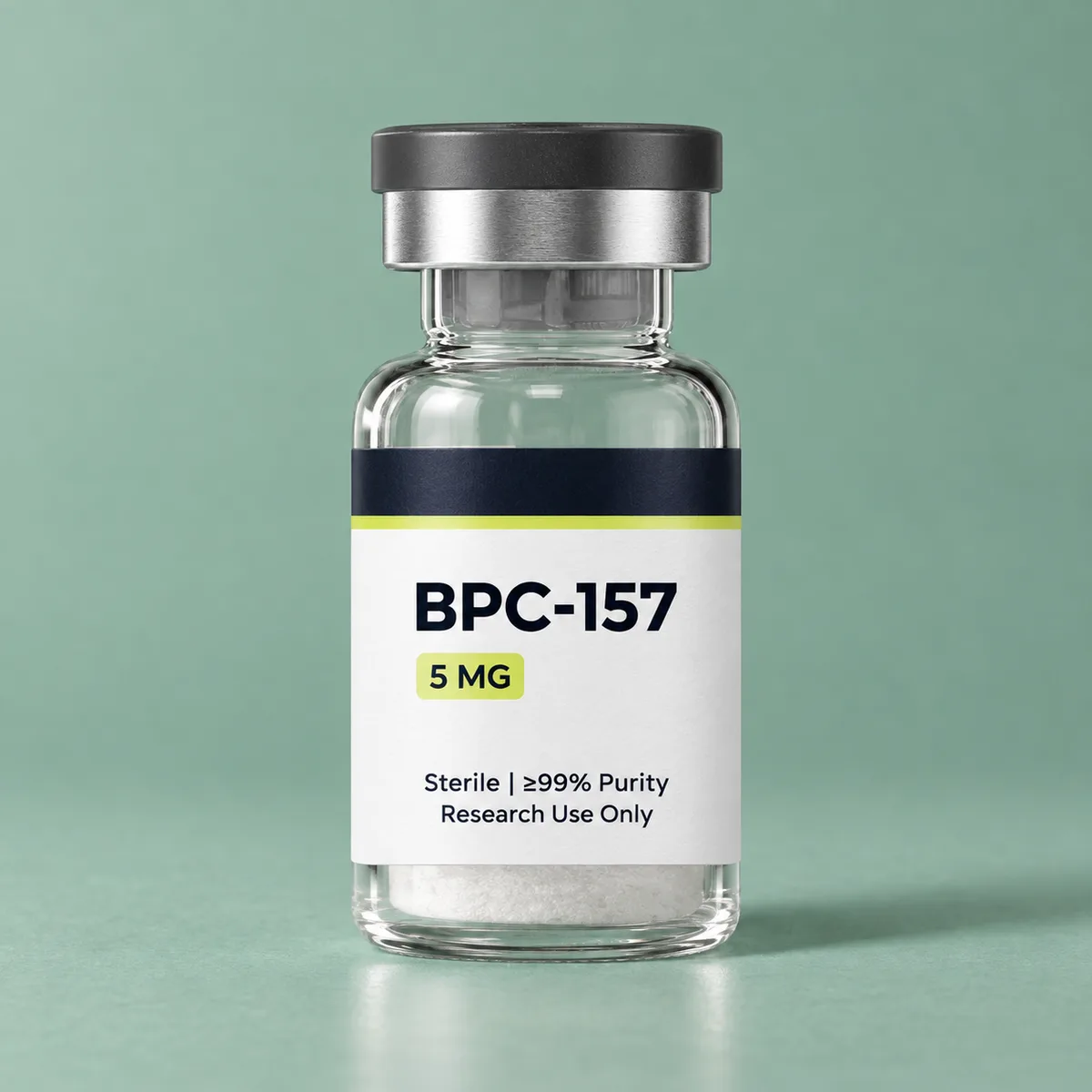
Injectable protocols reported in practice sit in the range of 200 to 500 micrograms once or twice daily, given subcutaneously, often near the area being treated, in courses of four to eight weeks. Oral capsule products are usually labeled in the same microgram range. Vials arrive as a freeze-dried powder that must be reconstituted with bacteriostatic water, and the error that sends people to urgent care is confusing milligrams with micrograms while drawing up insulin syringe units.
Side effects and risks
- Reported informally by users — injection site redness and irritation, nausea, headache, light-headedness, occasional fatigue. None of this comes from controlled monitoring.
- Unknown long-term profile — nobody has followed a treated human population for years, so late effects are simply unmeasured.
- Theoretical growth concern — a compound that promotes blood vessel growth is a poor fit for anyone with active or recent cancer, which is why screening comes first.
- Product risk — independent testing of gray-market peptide vials has repeatedly found wrong doses, impurities and contamination. That is the concrete hazard, not the molecule.
- Sport — BPC-157 is prohibited at all times under the World Anti-Doping Agency list of non-approved substances, and tested athletes have been sanctioned for it.
Legal and FDA status
BPC-157 is not an approved drug in the United States for any condition. In its review of substances nominated for pharmacy compounding, the FDA placed it in the category of bulk drug substances that may present significant safety risks, which effectively closes the door for licensed compounding pharmacies. The FDA has also stated that BPC-157 does not meet the definition of a dietary ingredient, so capsules marketed as supplements are outside the rules. Most vials online carry a research use only label, which is a legal disclaimer, not a quality standard.
How people get it legally
Honestly, the lawful supply route for BPC-157 is narrow. Because of its compounding category, a licensed US pharmacy should not be producing it, and no approved product exists. What remains legitimate is the first step of the process — a licensed physician who reviews your injury, your history and your labs, tells you what the evidence supports, and prescribes an approved medicine or a compounded peptide that still holds a lawful place. That conversation is also the only way to find out whether a peptide belongs in your plan at all.
Questions people ask
What does BPC-157 do for the body?
What are the negative effects of BPC-157?
Does BPC-157 damage the liver?
Can you buy BPC-157 over the counter?
Is BPC-157 safe to take orally?
Sources: PubMed — BPC-157 literature · FDA — bulk substances safety list · FDA — dietary supplement ingredient directory · USADA on BPC-157