Head to head
CJC-1295
vs sermorelin.
Same family, same receptor, and a difference in duration that decides everything else about them.
The short answer
These two are cousins. Both are analogs of growth hormone releasing hormone, both act on the same pituitary receptor, and both leave your own feedback loop in charge instead of replacing the hormone outright. The engineering is where they part. Sermorelin is the natural signal shortened to its active 29 amino acids, so it fires and clears in ten to fifteen minutes. CJC-1295 was rebuilt to survive, and the long-acting version keeps growth hormone and IGF-1 elevated for days after a single injection.
Judge them by what that buys you. Sermorelin gives short nightly pulses that imitate normal physiology, and it is a prescription drug a licensed pharmacy can compound. CJC-1295 gives a longer, flatter elevation, has the better human hormone data of the two, and was never approved anywhere. Endocrinologists treat the flat elevation as an open question rather than an upgrade, because natural growth hormone is supposed to arrive in bursts.
| CJC-1295 | Sermorelin | |
|---|---|---|
| Mechanism | Long-acting GHRH analog, days of elevation | GHRH analog, short pulse of minutes |
| Human evidence | Hormone rise confirmed, no outcome trials | Once an approved drug, thin modern adult data |
| What clinics use it for | Recovery and body composition, usually blended | Sleep, recovery and body composition in adults |
| Typical protocol | About 1 to 2 mg weekly, or 100 micrograms nightly | 0.1 to 0.5 mg at bedtime, five nights on |
| Side effects | Water retention, tingling hands, joint aches | Injection site reaction, flushing, headache |
| Monthly cost range | 200 to 400 dollars advertised | 150 to 300 dollars advertised |
| FDA status | Not approved, research compound | Prescription drug, compounded only |
Two versions, one name
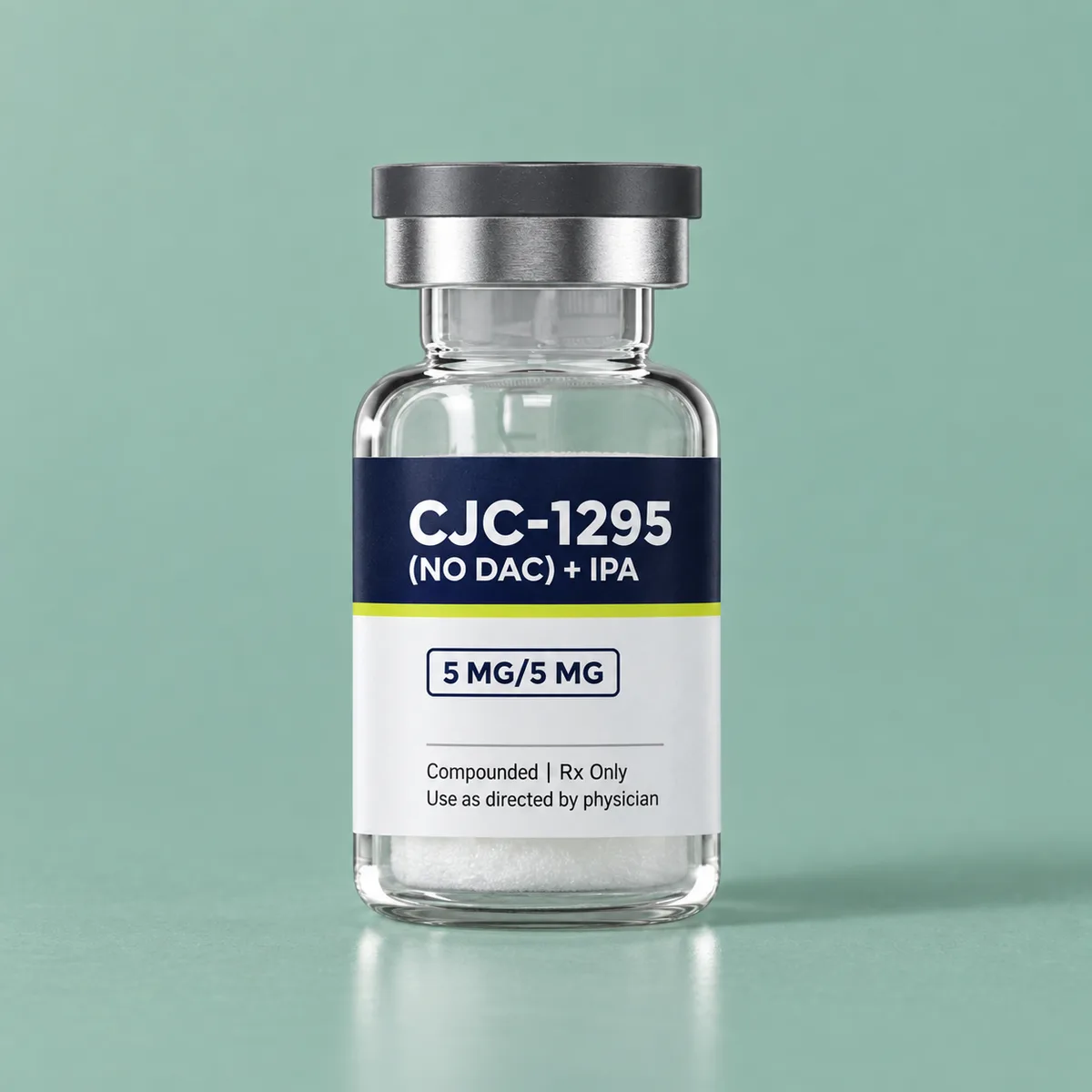
Before anything else, know which CJC-1295 is in the vial, because two different molecules are sold under that name. The long-acting form carries a drug affinity complex that binds albumin and keeps it circulating for about a week. The short form, correctly called modified GRF 1-29, clears in well under an hour and behaves much more like sermorelin. Vendors label both as CJC-1295, and the dosing differs by a factor that turns a weekly milligram dose into a nightly microgram dose. Mislabeling between the two is a documented route to accidental overdosing by a wide margin.
How each one works
Sermorelin is the first 29 amino acids of GHRH. It docks on the pituitary GHRH receptor, the gland fires, and the peptide is gone within minutes. That is why it is given before sleep, riding the body's own largest nightly pulse, and why clinics run five nights on with two off to keep the rhythm irregular the way physiology is.
CJC-1295 is the same signal with the clearance problem solved. The modification lets it ride along on albumin instead of being broken down, so one injection keeps asking the pituitary for hormone across days. That raises the average level rather than sharpening the peaks, which is a real pharmacological difference and the reason the long form is dosed weekly. Whether a plateau is better or worse than pulses for a healthy adult has not been settled by any trial.
What the evidence says
- CJC-1295 hormone data — dose-ranging work in healthy adults found sustained increases in growth hormone and IGF-1, with IGF-1 staying elevated for days to more than a week at higher doses. These are blood measurements in volunteers and they are the strongest evidence this compound has.
- What CJC-1295 never showed — no adequate trial tracked lean mass, fat mass, strength, injury recovery or how people felt. Body composition claims are inferred from what growth hormone does, not from testing this drug.
- Sermorelin standing — it was marketed in the US as Geref for pediatric growth hormone deficiency and used as a pituitary diagnostic, then discontinued for commercial reasons rather than safety findings.
- Sermorelin weak link — adult studies are older, small or focused on hormone levels. No large modern randomized trial shows meaningful fat loss, muscle gain or longevity benefit in healthy adults.
- No head to head — nobody has run a controlled trial comparing the two in healthy adults, so claims that one outperforms the other are preference dressed as evidence.
Can you take both
Stacking two GHRH analogs makes no sense, since they compete for the same receptor and one of them already covers the clock. What clinics actually combine is a GHRH analog with a ghrelin-receptor secretagogue, and CJC-1295 with ipamorelin is by far the most advertised pairing in the United States. Two different receptors, two signals, a larger pulse in theory, which is the entire rationale for the blended vials sold under a single label.
No trial has evaluated that combination for safety or benefit in healthy adults, and stacking is exactly when the growth hormone side effects show up, the fluid retention, the tingling hands, the joint stiffness and the drift in blood sugar. If someone is running a combination, IGF-1 before starting and again after several weeks is the only objective way to know whether the protocol is doing anything at all.
Cost and access
Advertised clinic pricing for a CJC-1295 program, usually blended with ipamorelin, tends to run 200 to 400 dollars per month, with sermorelin programs nearer 150 to 300 dollars. Those figures are marketing, not a regulated schedule, and they normally bundle the consult and the pharmacy fill.
Legal standing is the sharper difference. Sermorelin is a prescription drug with no marketed brand, so a licensed US compounding pharmacy prepares it for a named patient against a physician's order, and follow-up labs confirm whether IGF-1 moved. CJC-1295 is not approved for any indication and is not a recognized dietary ingredient. Members of this family were placed in the FDA category of bulk substances that may present significant safety risks, and licensed pharmacies have pulled back from the class, which leaves research use only vials as the circulating supply. That label describes the seller's legal position and nothing about what is inside.
Which one the doctor picks
A physician starts before the molecule. Fatigue, poor sleep and stalled recovery have common causes that bloodwork finds, and growth hormone deficiency is diagnosed with testing rather than a symptom checklist. Cancer history, diabetes and prediabetes change the answer immediately, because growth hormone works against insulin and stimulates growth pathways. If a secretagogue is still reasonable after that, sermorelin is the one that can be written lawfully and followed with labs. If true deficiency turns up, approved growth hormone products exist and are prescribed under monitoring. Either way the plan comes with a follow-up, which is the part no vial includes.
Questions people ask
What does CJC-1295 actually do?
Does CJC-1295 suppress testosterone?
How long does it take to see results from CJC-1295?
What are the downsides of CJC-1295?
Sources: PubMed — CJC-1295 literature · PubMed — sermorelin literature · FDA — bulk substances safety list · WADA prohibited list