Guide
Where to
inject.
Three usable sites, one short needle, and a rotation habit that keeps all three healthy.
The short answer
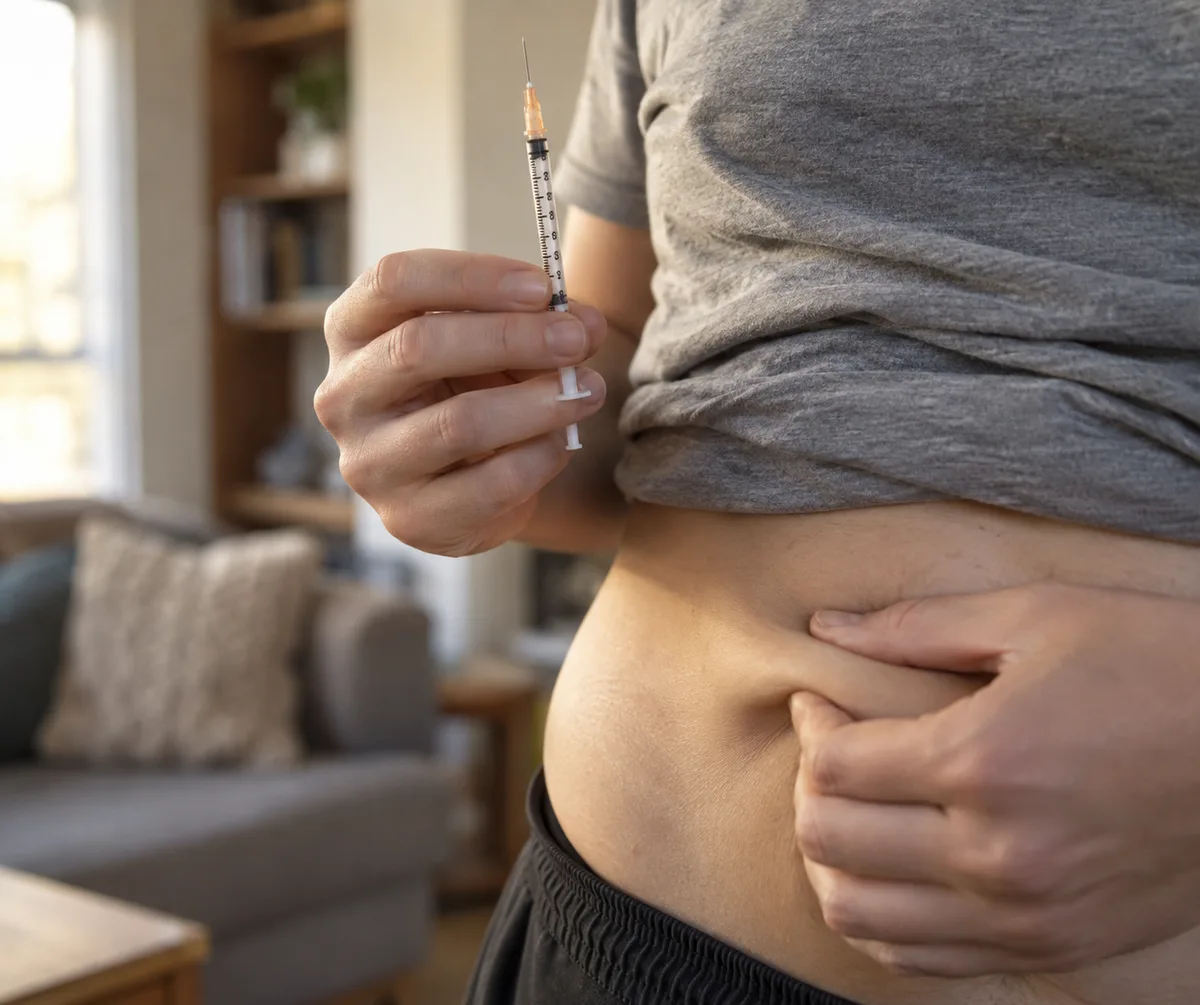
Peptides given at home are almost always subcutaneous, meaning the dose goes into the soft layer of fat between skin and muscle. That layer absorbs slowly and steadily, which is what the dosing schedule assumes. The abdomen is the standard site, the outer thigh and the back of the upper arm are the alternates, and moving between them each time is what keeps the tissue in good condition.
The three usual spots
- Abdomen — the area around the belly, staying about two inches away from the navel in every direction. Most people find the fat here easiest to pinch and easiest to see, and absorption is consistent.
- Outer thigh — the front and outer part of the upper leg, roughly the handspan between hip and knee. Comfortable to reach while seated and a good partner to the abdomen in a rotation.
- Back of the upper arm — the fatty area behind and below the shoulder. It works well, but reaching your own arm is awkward, so it is usually the site someone else uses on you.
- Areas to leave alone — scars, stretch marks, moles, tattoos, bruises, broken or inflamed skin, and any lump or dimple where you have injected too often.
Skin, not muscle
An intramuscular injection uses a longer needle, a different angle and different sites, and it delivers into tissue with far more blood flow. Peptides are dosed for the slower subcutaneous curve, so a shot that lands in muscle changes the timing of everything without any benefit, and it is more likely to hurt and bruise. Pinching the skin is what keeps the needle out of muscle, particularly in lean people and particularly on the thigh.
How the shot goes
- Wash your hands and swab the chosen spot with alcohol, then let it dry
- Pinch a fold of skin and fat gently between thumb and finger
- Insert at 90 degrees, or 45 degrees if the fold is thin
- Press the plunger down slowly and steadily
- Count a few seconds before withdrawing, then release the pinch
- Drop the syringe into a sharps container, never a trash bag
Rotate every time
Injecting the same square inch week after week is how people end up with lipohypertrophy, a rubbery thickening of the fat that absorbs drug unevenly and unpredictably. The fix is boring and effective: move at least an inch from the last spot each time, work across one area in a pattern you can remember, and change to a different area on a regular rhythm. Feel the skin before you inject. If a spot is firm, lumpy or numb, use somewhere else and give it months to recover.
Afterward
Press lightly with clean dry gauze if there is a bead of blood, and resist rubbing the site, since rubbing speeds absorption in a way the dose did not account for. A small pink dot, a faint sting for a few minutes, a little itch or a small bruise are all ordinary. Most of it is gone within a day.
What redness means
The kind of redness that matters is the kind that grows. Warmth and spreading redness over the following day or two, swelling that hardens, pus or drainage, a red streak moving away from the site, fever or chills, or pain that gets worse instead of better are all reasons to contact a clinician promptly. So is any sign of a whole-body reaction such as hives, lip or throat swelling, or trouble breathing, which is an emergency rather than a phone call.
Questions people ask
Where is the best place to do a peptide shot?
Do you inject peptides in fat or muscle?
What happens if you inject peptides into muscle?
How quickly do peptide injections work?
What are common mistakes in peptide dosing?
Sources: CDC — injection safety · FDA — safe sharps use and disposal · PubMed — injection technique and site rotation