Choosing a provider
Peptide therapy
near me.
The nearest clinic is not automatically the right one. Here is when distance matters and when it only costs you money.
The honest answer
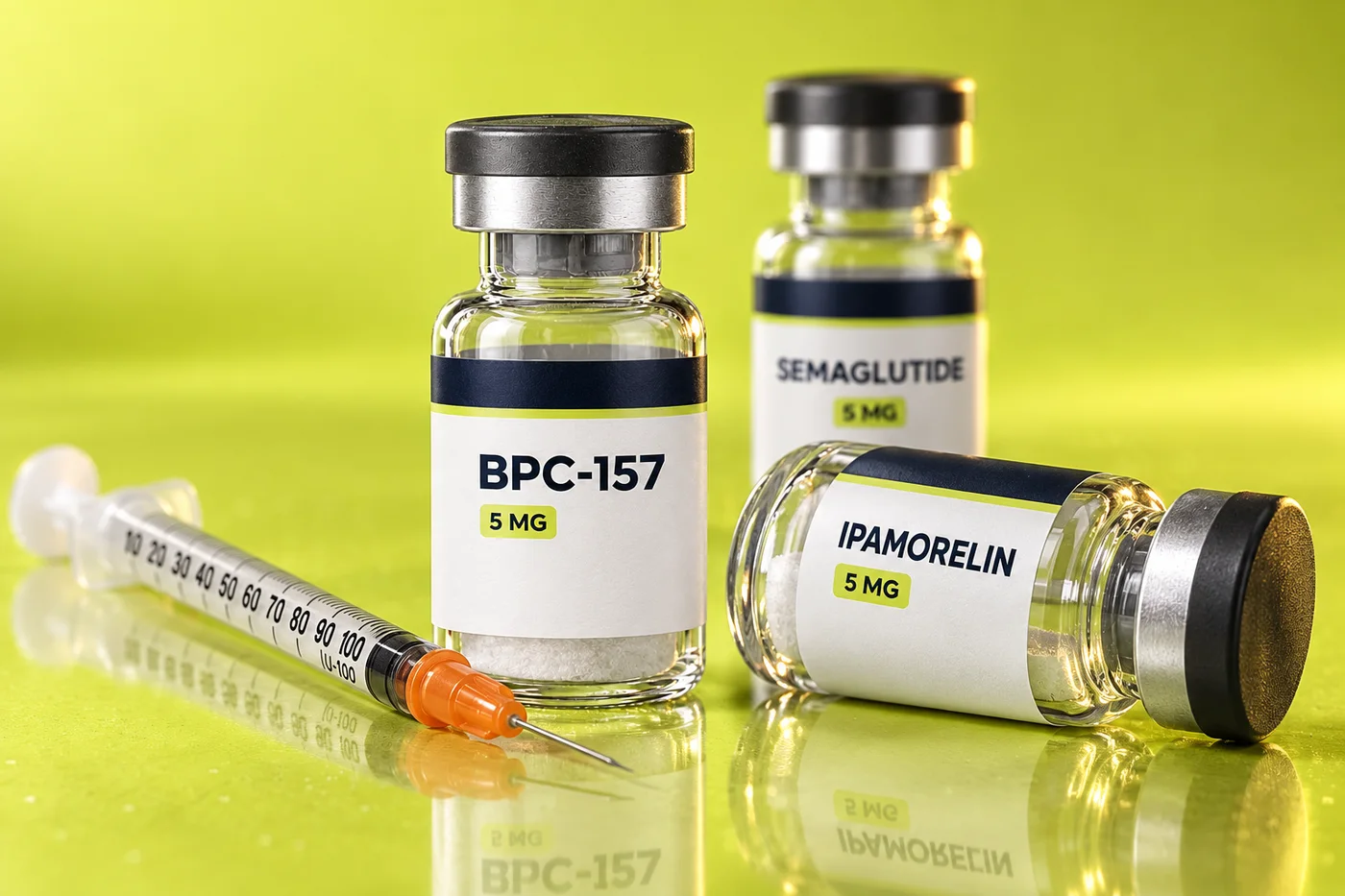
When you search for peptide therapy near you, what comes back is mostly med spas and wellness clinics, not medical practices. Many of them are staffed properly and prescribe responsibly. All of them carry the cost of a lease, a front desk and treatment rooms, and that cost lands in your monthly bill. Meanwhile licensed telehealth handles the same history, labs, prescribing and follow-up from your kitchen table, with prescribers licensed in all 50 states and a pharmacy that ships cold-chain to your door. For most peptide protocols, which are self-administered subcutaneous injections at home, proximity buys you nothing clinical. It buys you a waiting room.
What near me returns
The listings at the top of a local search are ranked by marketing spend and review volume, not by clinical quality, and the category label is loose enough that a laser hair studio and an internal medicine practice appear in the same list. Three types show up.
- Med spas and wellness centers — aesthetics-led businesses that added peptides and hormone programs. Prescribing usually runs through a physician or nurse practitioner who may or may not be on site. Pricing is retail, packages are common, and the person who takes your payment is often the person recommending the treatment.
- Physician practices and longevity clinics — a doctor examines you, orders labs, and prescribes. This is the real thing when you can find it, and it is the least common result in a local search.
- IV lounges and drip bars — built around infusions rather than prescriptions. Useful for the narrow set of protocols actually given intravenously, irrelevant for the rest, and priced per visit.
When in person matters
- An IV protocol is the plan — NAD+ and similar infusions are administered by a clinician over a session that runs for hours. That cannot happen over video, and the home subcutaneous version of the same compound is a different and far cheaper route worth asking about first.
- A physical exam changes the answer — an injury that has not healed, a lump, unexplained swelling, a wound, abdominal pain. Anything a clinician needs to touch, press or look at belongs in a room with you.
- Your history is complicated — cancer history, thyroid disease, pancreatitis, kidney or liver disease, pregnancy, several interacting prescriptions. A complex chart deserves an examining clinician and, often, coordination with the doctor who already knows you.
- You cannot self-inject — hand tremor, vision limits, needle phobia that training has not solved. A clinic that administers the dose removes a real barrier.
- Bloodwork must happen anyway — telehealth sends you to a local draw site regardless, so a nearby lab matters more than a nearby clinic.
Local prices versus online
Clinics with a physical location generally price above the published telehealth bands, and packages sold at the front desk are where the gap widens most. Our price index tracks advertised US telehealth pricing: roughly 200 to 400 dollars a month for compounded semaglutide, 300 to 500 dollars a month for compounded tirzepatide, 1000 to 1350 dollars a month for brand GLP-1 pens before savings programs, and 150 to 350 dollars a month for growth hormone peptides such as a CJC-1295 and ipamorelin combination.
| What you compare | Local clinic or med spa | Licensed telehealth |
|---|---|---|
| Monthly price | Usually above the published online bands | The bands in the price index, before labs |
| Extra charges | Visit fees, packages, in-clinic administration | Membership or consult fee, labs, shipping |
| Physical exam | Yes, in the room | No, history and labs only |
| Follow-up | By appointment, during opening hours | Messaging with a medical team, most days |
| Best for | IV protocols, exams, complex history | Home injections, titration, ongoing refills |
Price the whole year, not the first month. A local package paid up front removes your ability to stop, and stopping is exactly what you want to be able to do if the protocol is not working or a side effect appears.
Vet a clinic in one call
You can settle this before you book. Call, ask these in order, and listen for hesitation rather than for charm.
- Who writes the prescription, and are they licensed in this state
- Will I meet that prescriber, or only staff
- Which US pharmacy fills it, by name
- What labs do you require before the first dose
- What is the total monthly cost with labs and visits included
- Can I pay month to month, without a package
- What happens to my money if I stop in week three
- Who do I reach after hours if a side effect starts
- Do you coordinate with my primary care doctor
Walk away when you hear
- The pharmacy cannot be named on the phone
- A twelve month package is required to get the advertised rate
- The prescriber is described only as our medical director
- Labs are optional because the protocol is safe for everyone
- A price is quoted before anyone has asked about your health
- Results are guaranteed, or a specific weight is promised
What to bring
Take the same file to either kind of visit, because it shortens the process and improves the decision. Bring a current medication and supplement list with doses, any labs from the past year, your personal and family history of thyroid cancer, pancreatitis, gallbladder disease and cancer of any kind, a plain description of your goal and the deadline you have attached to it, your height, weight and recent blood pressure readings, and the name of your primary care doctor. Add anything you have already tried and how it went. A clinician who has that in front of them can tell you no for a real reason, which is the most valuable thing either visit can produce.
Questions people ask
How do I find peptide therapy near me?
Is a local clinic better than online?
How much does peptide therapy cost near me?
Do med spas have real doctors?
What should I ask a clinic before paying?
Sources: FDA — compounding questions and answers · FDA — bulk substances safety list · PubMed — telemedicine outcomes