Cost guide
Sermorelin.
Real cost.
The cheapest tier of prescription peptide therapy, what the monthly price actually includes, and why the same vial costs twice as much down the street.
The short answer
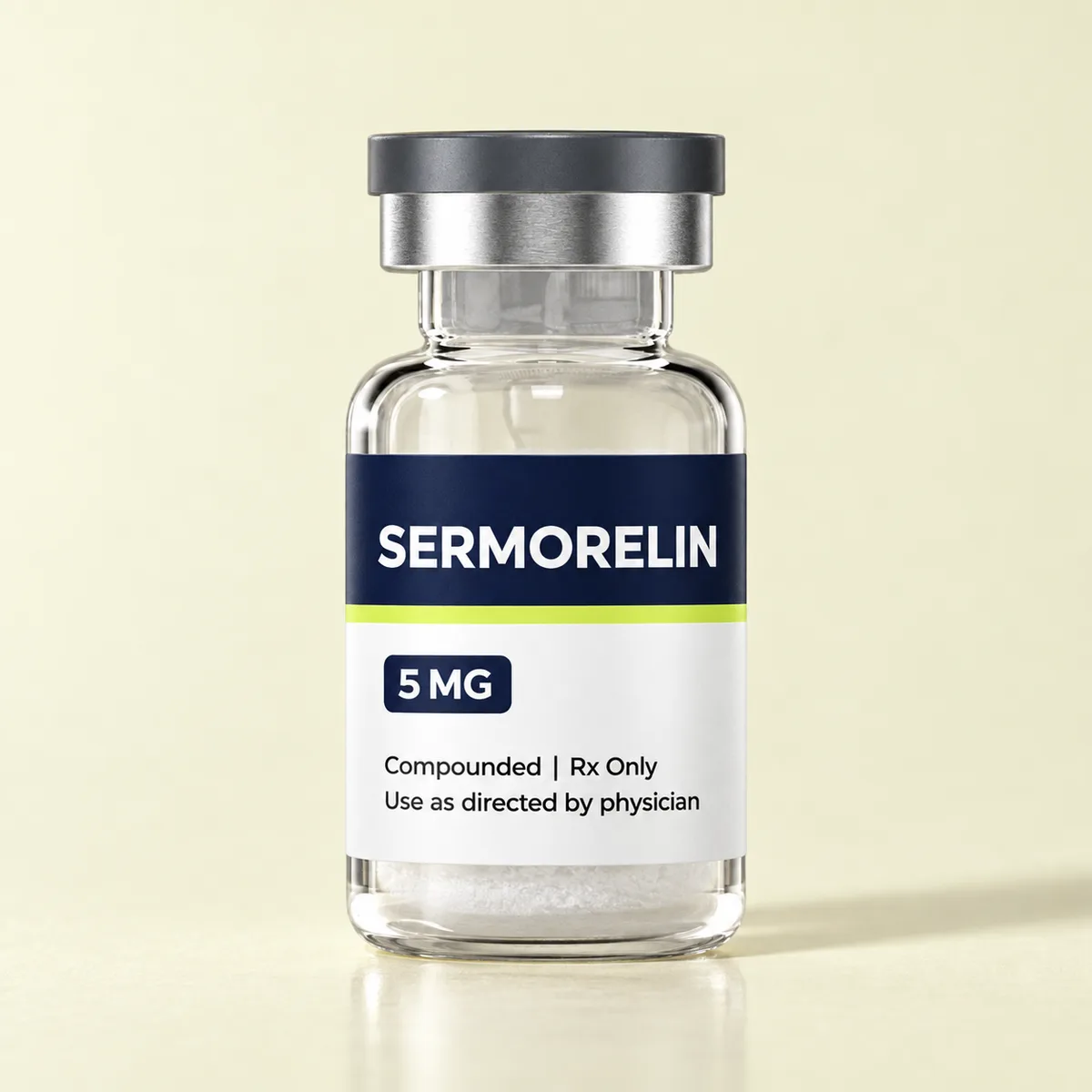
Through US telehealth clinics, compounded sermorelin is typically advertised at roughly 50 to 150 dollars a month, which makes it the cheapest prescription peptide most people will be offered. The price depends on the dose your physician sets, the size of the vial and the pharmacy that compounds it. Everything on this page is the range clinics publish, not a quote, and peptide pricing changes often enough that any number here is a starting point for your own questions.
What a month costs
- Telehealth subscriptions — the common advertised band is 50 to 150 dollars a month for a compounded vial shipped to you, with the higher end reflecting larger vials and higher nightly doses.
- In-person longevity clinics — as a rule they sit above telehealth for the same molecule, often through a membership or program fee layered on top of the medicine. You are paying for the building and the in-person visit as much as for the vial.
- Stacks cost more — sermorelin combined with ipamorelin or sold as a CJC blend moves the monthly price up into the wider growth hormone peptide band, which clinics generally advertise at 150 to 350 dollars a month.
- Bloodwork — an initial panel with IGF-1 commonly runs 100 to 300 dollars and is usually billed on its own, with follow-up testing during the course.
What is included
A normal telehealth price covers the clinician review and prescription, the compounded vial from a licensed US pharmacy, bacteriostatic water and syringes in most cases, and shipping. What is frequently not included is the initial lab panel, repeat labs later in the course, and any dose increase that pushes you into a larger vial. Ask which of those five items the advertised number actually contains before you compare two clinics, because the same monthly figure can mean very different things.
Why prices vary
- No brand product exists. Sermorelin left the US market as a brand medicine, so every legitimate vial today is compounded for a named patient. There is no list price to anchor against, and pharmacies set their own.
- Dose and vial size. Sermorelin is priced by the milligrams in the vial, so a nightly dose at the top of the usual range costs materially more per month than one at the bottom.
- Pharmacy scale. A 503B outsourcing facility produces at a different scale than a 503A pharmacy filling one prescription at a time, and the difference lands in your bill.
- How much care is attached. Real lab review, dose adjustment and a clinician who answers messages cost more than a checkout flow, and that is the part worth paying for.
- Prepay terms. Quarterly plans usually carry a discount against month to month, which only helps if the therapy turns out to be right for you.
Against other GH peptides
Sermorelin is normally the cheapest option on a growth hormone peptide menu. Ipamorelin alone tends to be priced close to it or slightly above, and the combination protocols clinics prescribe most often, sermorelin with ipamorelin or a CJC-1295 with ipamorelin blend, generally run two to three times a plain sermorelin subscription. The extra money buys a longer acting signal and a second pathway, not proof of a better outcome, because human evidence comparing these protocols head to head is thin.
Red flags on cheap vials
- A vial sold without a prescription is not a bargain, it is an unregulated product with no one accountable for what is inside it
- A research use only label is a legal disclaimer, not a purity standard
- A clinic that will not name the compounding pharmacy is hiding the only fact that determines quality
- A price far under the advertised band usually means no clinician review, no labs and no follow-up
- A long prepaid package sold before any bloodwork is a subscription, not treatment
- Independent testing of gray-market peptide vials has repeatedly found wrong doses and impurities, which is a concrete hazard, not a theoretical one
Questions people ask
How does sermorelin affect aging?
How much does sermorelin cost per month?
Why is sermorelin more expensive at a clinic?
Is sermorelin covered by insurance?
Can you buy sermorelin without a prescription?
Sources: PubMed — sermorelin literature · Drugs at FDA — approval records · FDA — compounding questions and answers · FDA — compounding safety risks