Peptide guide
Tesamorelin.
The FDA one.
The only growth hormone releasing peptide that made it all the way through approval, for one narrow indication. Everything else is off-label.
The short answer
Tesamorelin is the one GHRH analog that is an FDA-approved drug. It is marketed as Egrifta and approved for the reduction of excess visceral abdominal fat in adults with HIV-associated lipodystrophy. In the randomized trials behind that approval it cut visceral adipose tissue by roughly 15 percent over 26 weeks, which is a real, measured, imaging-confirmed effect. Every other use people ask about, from general belly fat to anti-aging, is off-label and rests on inference rather than on that evidence.
What the research shows
- The pivotal trials. Two phase 3 randomized, placebo-controlled trials in adults with HIV-associated lipodystrophy measured visceral adipose tissue by CT scan. Tesamorelin produced roughly 15 percent reduction at 26 weeks against placebo, with the results published in the New England Journal of Medicine and in follow-up analyses.
- It targets the fat people care about. The loss was in visceral fat, the deep abdominal depot associated with metabolic risk, rather than in subcutaneous fat. Total body weight barely moved, which surprises people expecting a scale result.
- The effect depends on continued use. In the extension phase, participants switched to placebo regained visceral fat toward baseline. Nothing about the drug rewires fat storage permanently.
- Mechanism. Tesamorelin binds pituitary GHRH receptors and stimulates pulsatile release of your own growth hormone, raising IGF-1. Because the gland does the work, normal feedback control stays in place, unlike injected growth hormone.
- Liver fat is the active research question. Later studies examined tesamorelin and hepatic fat in people with HIV, with reductions reported. That work is promising and is not an approved use.
- What has not been shown. No adequate trial establishes tesamorelin as a general obesity treatment, a muscle builder or an anti-aging therapy in healthy adults. Clinics selling it that way are extrapolating from a different population.
Dosing in practice
A physician sets the dose, and in this case there is an actual approved label to set it from. The figure below describes the approved setting so you can read a prescription, not as a protocol to copy.
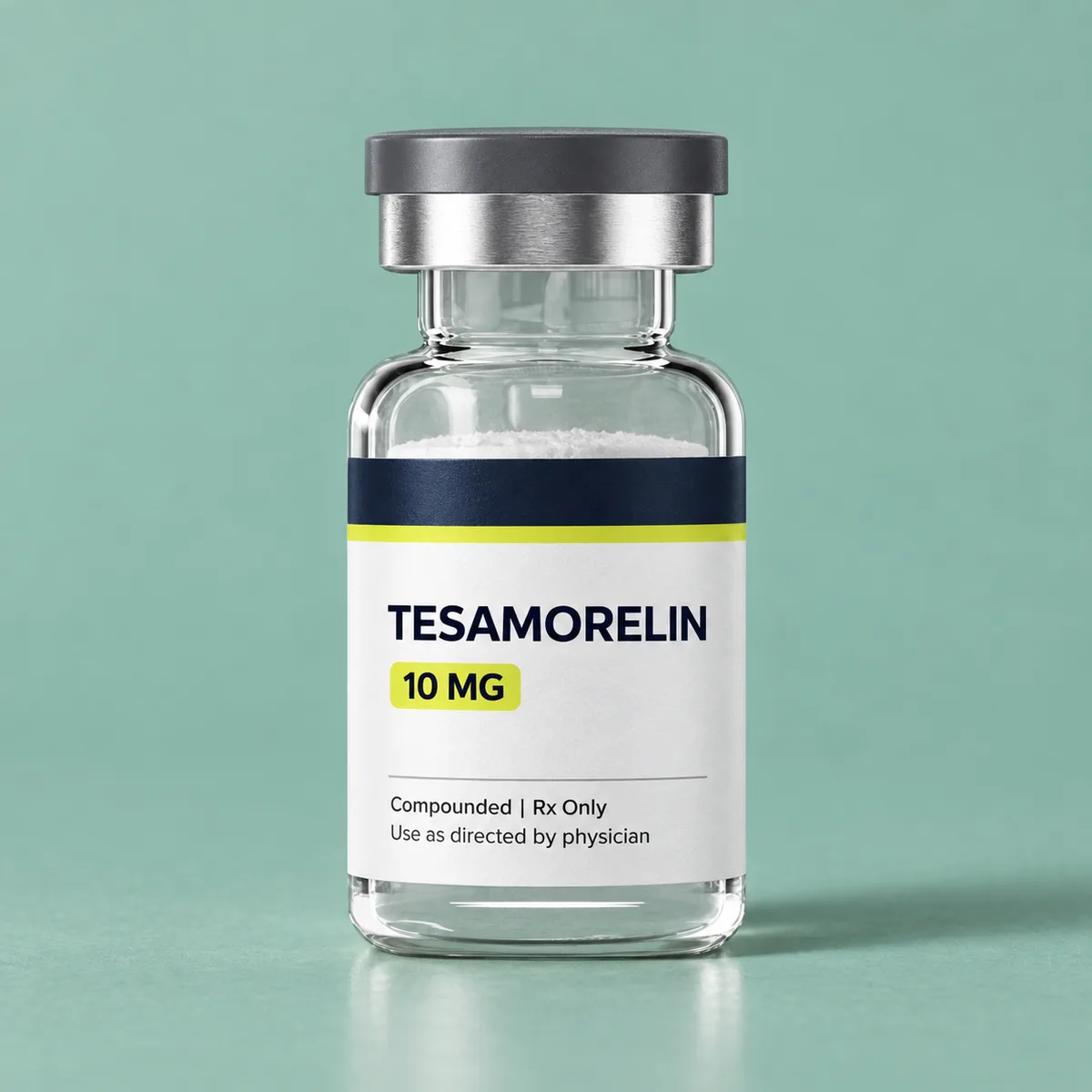
In the approved indication tesamorelin is given as 2 mg once daily by subcutaneous injection into the abdomen, rotating sites. The product arrives as a freeze-dried powder that must be reconstituted before use, and treatment is continued only as long as your clinician judges the benefit to be there. Milligram and microgram confusion during reconstitution is the classic error with any peptide vial, so check the math before you draw up.
Side effects and risks
- Joint and muscle — arthralgia, muscle aches and stiffness are among the most commonly reported effects, and they come from raising growth hormone rather than from the molecule being unusual.
- Fluid retention — swelling in the hands, feet or ankles, sometimes with tingling or carpal tunnel type symptoms.
- Injection site reactions — redness, itching, pain, bruising and rash where the needle went in, which is why sites are rotated.
- Glucose effects — growth hormone opposes insulin, so blood sugar and hemoglobin A1c can drift upward. People with diabetes or prediabetes need monitoring, and this is a common reason a physician says no.
- Who should avoid it — anyone with active malignancy, since IGF-1 is a growth signal, plus pregnancy, and anyone with a disrupted pituitary axis. Hypersensitivity reactions are also described on the label.
- Tested athletes — GHRH analogs are prohibited at all times under the World Anti-Doping Agency list, and laboratories test for them.
Legal and FDA status
Tesamorelin is a prescription drug approved by the FDA, which puts it in a different category from almost every peptide discussed online. The approval covers one indication in one population, and prescribing it for anything else is off-label use, which a licensed physician may lawfully do while carrying the responsibility for that decision. Compounded tesamorelin also circulates, sold by pharmacies and telehealth programs at prices below the brand. That sits in a gray zone: compounding a drug that is commercially available as an approved product is tightly restricted, so the legitimacy of any given compounded vial depends entirely on the pharmacy and the prescription behind it.
How people get it legally
The path is short. A licensed clinician reviews your history, your labs and your reason for asking, and decides whether an approved GHRH analog fits your situation at all. If it does, a prescription goes to a licensed US pharmacy and follow-up testing confirms that IGF-1 and glucose are behaving. If it does not, you have saved yourself a daily injection and a large bill, which is a legitimate result of the conversation.
Questions people ask
What does taking tesamorelin do?
Is tesamorelin similar to Ozempic?
Will tesamorelin get rid of belly fat?
Who should not take tesamorelin?
Does fat return after stopping tesamorelin?
Sources: PubMed — tesamorelin phase 3 trials · PubMed — tesamorelin and liver fat · Drugs at FDA — Egrifta approval record · FDA — compounding questions and answers