Peptide guide
Semaglutide.
The standard.
The peptide that changed obesity medicine, with the trial numbers, the real prices and the compounding rules as they stand now.
The short answer
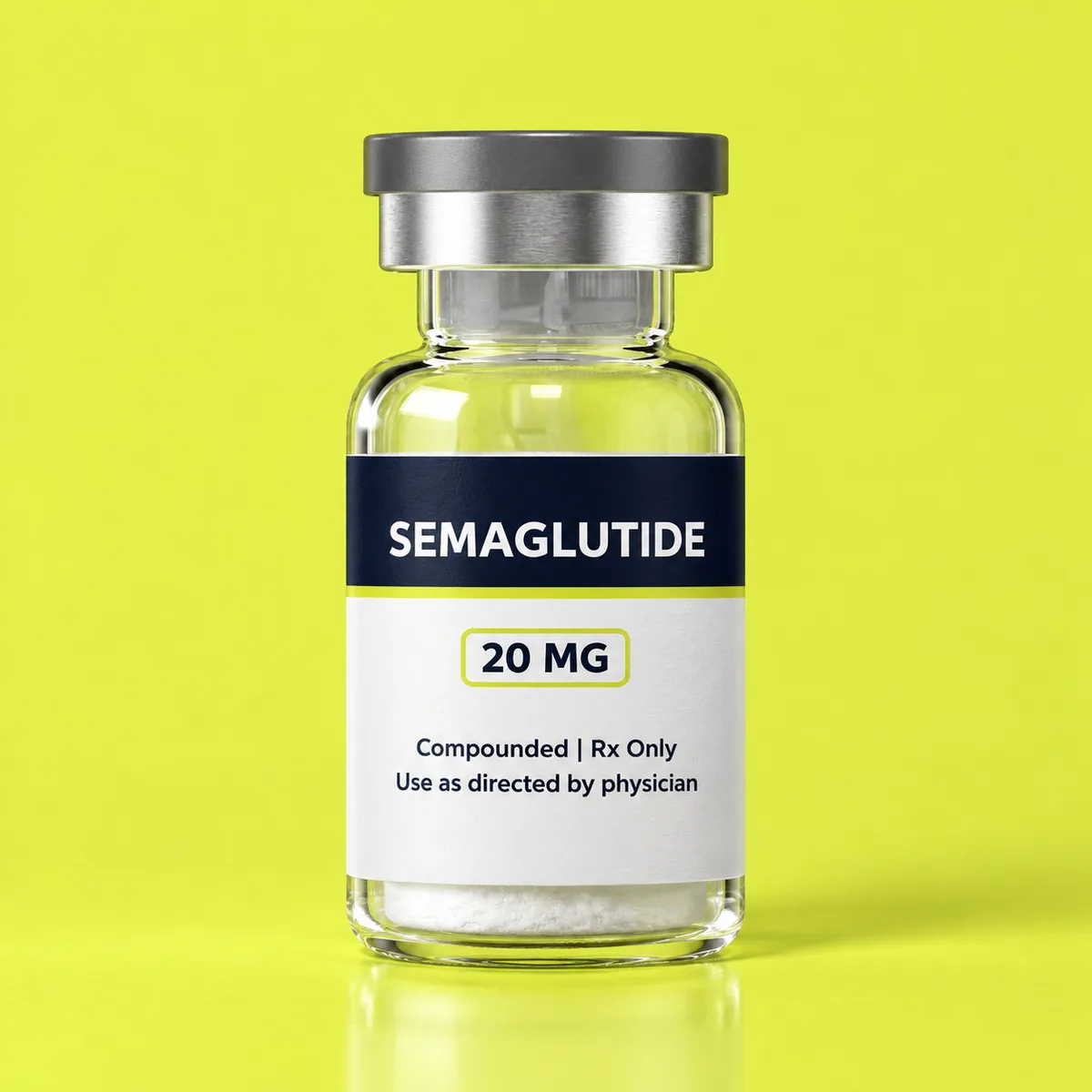
Semaglutide is a GLP-1 receptor agonist and the benchmark every other weight loss peptide is measured against. It is FDA approved and sold under three brand names: Ozempic for type 2 diabetes, Wegovy for chronic weight management, and Rybelsus as a daily tablet. In the STEP 1 trial, participants on 2.4 mg weekly lost 14.9 percent of body weight on average over 68 weeks. That is a real drug with real data, dispensed by prescription, which already separates it from most of what gets marketed as a peptide.
What the trials show
- STEP 1 — 68 weeks, 2.4 mg weekly plus lifestyle support, 14.9 percent mean body weight loss against 2.4 percent with placebo. This is the trial that produced the Wegovy approval and the number everyone quotes.
- Spread around the average — the mean hides a wide range. Roughly a third of participants lost 20 percent or more, and a minority lost little. Nobody can tell in advance which group a given person lands in.
- Diabetes first — the molecule was approved for type 2 diabetes before weight management, and blood sugar control remains its primary labeled use under the Ozempic name.
- Cardiovascular outcomes — semaglutide has been studied for cardiovascular risk reduction in people with excess weight and established heart disease, which is part of why physicians and insurers treat it as a medical therapy rather than a cosmetic one.
- The oral form — Rybelsus delivers semaglutide as a daily tablet for type 2 diabetes, with strict instructions about taking it on an empty stomach with a small sip of water.
The compounded question
This is where most confusion lives, so here it is plainly. While semaglutide sat on the FDA shortage list, compounding pharmacies were permitted to make versions of it, and an enormous telehealth market grew on top of that allowance. The shortage was resolved, brand supply recovered, and through 2025 and 2026 the FDA moved to end most of that activity and took action against mass production and mass marketing of non-approved GLP-1 products.
What that means for a person shopping today: a program advertising cheap semaglutide is not automatically illegitimate, but it is no longer the default situation it was. Narrow patient-specific compounding can still be lawful in defined circumstances. Ask the clinic to name the pharmacy, state its license type, and explain the legal basis for compounding your prescription. A vendor selling vials without a prescription is not a pharmacy at all, whatever the website looks like.
Dosing in practice
A physician sets the dose and the schedule. What follows is the labeled pattern, described so you can read a prescription rather than design one.
Weight management dosing starts low and climbs slowly, usually 0.25 mg once weekly for four weeks, then stepping up at roughly monthly intervals toward a maintenance dose of 2.4 mg weekly. The slow climb exists to limit nausea, and rushing it is the most common self-inflicted problem. Diabetes dosing under the Ozempic label tops out lower. Brand products come in prefilled pens with fixed doses, while compounded vials are drawn with a syringe, which is where dosing errors enter the picture.
What it costs
Brand-name Wegovy or Ozempic without insurance is typically advertised at roughly 1000 to 1350 dollars per month, and manufacturer savings programs and direct-to-patient pricing often bring that down substantially. Where compounded programs remain lawful, telehealth clinics typically advertise 200 to 400 dollars per month. Insurance coverage for weight management specifically is inconsistent and depends on the plan, the diagnosis and prior authorization, while coverage for type 2 diabetes is far more common.
Side effects and risks
- Common and usually manageable — nausea, vomiting, diarrhea, constipation, reflux, fatigue. Most of it tracks with dose increases and settles as the body adapts.
- Uncommon but serious — pancreatitis, gallbladder disease including stones, kidney problems from dehydration after prolonged vomiting.
- Boxed warning — thyroid C-cell tumors occurred in rodents. The label contraindicates use in anyone with a personal or family history of medullary thyroid carcinoma or multiple endocrine neoplasia type 2.
- Muscle loss — a meaningful share of the weight lost on GLP-1 therapy is lean mass. Resistance training and adequate protein are not optional extras, they are part of doing this properly.
- Stopping — weight regain after discontinuation is the rule rather than the exception in trial follow-up, which is why physicians frame this as long-term treatment for a chronic condition.
Legal and FDA status
Semaglutide is an approved prescription drug in the United States under the Ozempic, Wegovy and Rybelsus brands. It is prescription-only in every form, including compounded versions. There is no lawful over-the-counter semaglutide, no research-use vial that is legal for a person to inject, and no legitimate pharmacy that ships it without a prescriber reviewing your history.
The doctor path
The route is short and unglamorous. A licensed physician reviews your weight history, medical history, medications and labs, decides whether a GLP-1 is appropriate and which one, writes a prescription that a US pharmacy fills, and then monitors the titration and the side effects. That same visit catches the reasons semaglutide would be the wrong choice for you, which is a service no online vendor provides.
Questions people ask
Are peptides the same as Ozempic?
How much weight can you lose on semaglutide?
Is compounded semaglutide still legal?
What are the side effects of semaglutide?
Does weight come back after stopping semaglutide?
Sources: NEJM — STEP 1 semaglutide · FDA on compounded GLP-1s · FDA — Wegovy approval · PubMed — semaglutide literature