Stack guide
CJC-1295 and
ipamorelin.
The growth hormone pair nearly every clinic dispenses, and the trial that would justify it has never been run.
The short answer
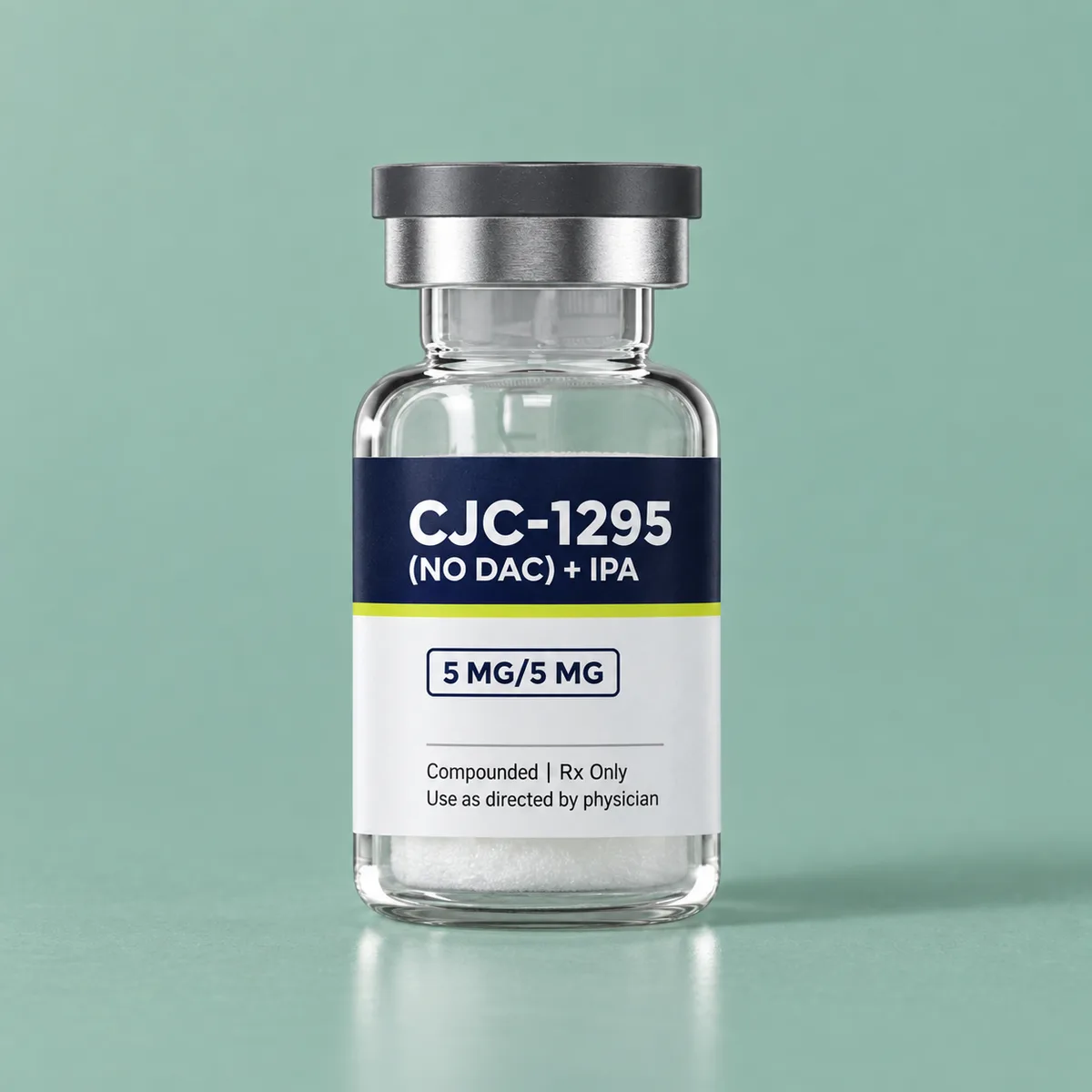
This is the most commonly prescribed peptide combination in American wellness clinics, usually arriving as a single vial with both compounds already mixed and a nightly dose before bed. The mechanism behind it is genuine. CJC-1295 is a growth hormone releasing hormone analog and ipamorelin works on the ghrelin receptor, so the two push the same growth hormone pulse through separate doors, and the response is larger than either produces alone. What does not exist is any trial of the combination in people measuring something a patient would notice, and neither compound is approved by the FDA for any use.
Why the two are paired
Growth hormone release is governed by more than one system, which is the whole basis for the combination. A GHRH analog tells the pituitary to release hormone. A ghrelin receptor agonist adds a second, independent signal to release, and compounds in that class also reduce the braking signal that normally keeps a pulse short. Two accelerators and one lifted brake produce a bigger pulse than either input alone, and that is established pituitary physiology rather than clinic marketing.
Selectivity is the other half of the argument. Older ghrelin type compounds raised cortisol and prolactin alongside growth hormone, which made them unattractive. Ipamorelin was designed to avoid that, and the founding pharmacology work supports the claim. So the pairing is theoretically sound. Theoretically sound is where the evidence stops.
The two ingredients
| CJC-1295 | Ipamorelin | |
|---|---|---|
| Mechanism | GHRH analog, signals the pituitary to release growth hormone | Ghrelin receptor agonist, adds a second release signal and eases the braking signal |
| Half-life | The short form, correctly called modified GRF 1-29, clears in well under an hour. The long-acting form with the drug affinity complex keeps working for days | Roughly two hours, which suits a single pulse at bedtime |
| Role in the stack | Sets the size of the release signal | Sharpens and amplifies the pulse |
| Side effects | Water retention, tingling hands, joint aches, higher blood sugar at the top of the range | Water retention, headache, lightheadedness after dosing, increased appetite |
The distinction in that first row matters more than anything else on this page. Two different molecules are sold under the CJC-1295 name, one clearing in minutes and one working for days, and they are dosed completely differently. Checking which one is in the vial comes before any other question.
What clinics dispense
A physician sets any protocol. What follows is reported clinic practice, described so a label makes sense to you, not as a recommendation.
The usual dispensed product is a combined vial containing the short-acting form of CJC-1295 with ipamorelin, reconstituted with bacteriostatic water and injected subcutaneously once nightly before bed, on an empty stomach so that food does not blunt the response. Reported amounts sit near 100 micrograms of the GHRH component alongside 200 to 300 micrograms of ipamorelin. Many protocols run five nights out of seven, and courses of eight to twelve weeks with a break are common, on the reasoning that a hormone axis should not be pushed continuously. IGF-1 bloodwork before starting and again after several weeks is the only objective way anyone checks whether the protocol is doing anything at all.
What the evidence covers
- CJC-1295 alone — published dose ranging work in healthy adults found sustained increases in growth hormone and IGF-1 after a single injection. Those are blood measurements in volunteers and they are the strongest data this stack has.
- Ipamorelin alone — founding pharmacology work showed selective growth hormone release without the cortisol and prolactin rises of older compounds. Clinical development targeted slow gut function after surgery and never produced an approved medicine.
- The combination — no published trial has evaluated the two together for safety or for benefit in any population.
- What nobody measured — lean mass, fat mass, strength, sleep quality, injury recovery and how patients actually felt. Claims about body composition are inferred from what growth hormone does in general, not from testing this pair.
- Pulses versus a plateau — natural growth hormone arrives in sharp nightly bursts. Protocols that keep the signal elevated depart from that rhythm, and endocrinologists treat the difference as an open question rather than a feature.
Who considers it
The typical candidate is an adult in their forties or older who sleeps poorly, recovers slowly from training and wants the effects of growth hormone without a growth hormone prescription. Clinics also market it to people chasing body composition changes. What is worth separating is the diagnosis from the wish. Adult growth hormone deficiency is a real condition, it is confirmed by stimulation testing rather than a symptom checklist, and it is treated with approved medicines under monitoring. Fatigue and slow recovery far more often trace back to sleep debt, untreated apnea, low iron, thyroid disease or simply training load, and none of those improve because a peptide was added on top.
Side effects and risks
- Most common in practice — water retention and puffiness, tingling or numbness in the hands, joint aches, headache and injection site redness. These are the classic signals that growth hormone is being pushed too hard.
- Appetite can increase, since the ipamorelin half works through the ghrelin receptor. Worth knowing if the goal was fat loss.
- Blood sugar — growth hormone works against insulin, so glucose deserves monitoring in anyone with prediabetes or diabetes.
- Cancer history — stimulating a growth pathway is the wrong move for anyone with active or recent malignancy, and that call belongs to a physician with your records.
- Product quality — combined vials from unregulated sources carry two unknowns instead of one, and mislabeling between the long and short forms of CJC-1295 leads to overdosing by a wide margin.
- Sport — growth hormone secretagogues are prohibited at all times under the World Anti-Doping Agency list.
What it costs
Advertised programs for the combined vial generally run 150 to 350 dollars per month, usually bundled with a consultation and sometimes with bloodwork. Those are clinic and vendor numbers rather than regulated prices, and they vary widely by state and by how much of the package is medical care instead of product.
The conversation to have
If the goal is more growth hormone activity, the legitimate starting point is whether your hormone axis is actually underperforming, which requires testing. A licensed physician can order IGF-1, arrange the stimulation testing a diagnosis requires, look for the ordinary causes of poor sleep and slow recovery, and treat what the workup finds. If a growth hormone pathway medicine is genuinely warranted, approved products exist and are prescribed under monitoring. That path is slower than a nightly vial and it is the one that can be defended later.
Questions people ask
What does CJC-1295 with ipamorelin do?
How long does it take to see results from the stack?
When should I take CJC-1295 and ipamorelin?
Is the CJC and ipamorelin stack safe?
Sources: PubMed — CJC-1295 studies · PubMed — ipamorelin research · FDA — bulk substances safety list · WADA Prohibited List