The ranking
The honest
top list.
Everyone publishes a best peptides list. Almost nobody publishes the rule they ranked by, so here is ours first.
How this list is ranked
Most best peptide lists rank by search volume dressed up as expertise, which is how a compound with zero human trials ends up at number one. This one uses three rules, applied in order, and you can check every entry against them.
- Human evidence beats hype. A randomized controlled trial in people outranks a rodent study, a mechanism diagram and ten thousand forum posts combined. Animal data earns a compound a hearing, not a ranking.
- Approved beats compounded beats research-labeled. An FDA-approved medicine has a known identity, dose and safety file. A compounded prescription has a licensed pharmacy behind it. A vial labeled for research use has neither, and that label is a legal disclaimer rather than a quality standard.
- Effect size counts, and so does what it treats. A large measured effect on something that matters beats a small effect on a surrogate marker. Raising a hormone level is not a result. Losing 20 percent of body weight is.
Applied honestly, those rules produce a list that looks nothing like the ones ranked by popularity, and the most searched peptide in the country does not make it.
1. Tirzepatide
Tirzepatide is a dual GIP and GLP-1 receptor agonist and it holds the largest measured effect of any peptide sold for any purpose, at 20.9 percent mean body weight loss at the top dose in SURMOUNT-1. It is FDA approved, it is prescription-only, and it is the reason the whole category got mainstream attention in the first place.
2. Semaglutide
Semaglutide is the GLP-1 agonist behind Ozempic and Wegovy, with 14.9 percent mean weight loss over 68 weeks in STEP 1 and cardiovascular outcome data on top of that. It sits second only because tirzepatide beat it on the scale, and for many people it is still the right prescription.
3. Tesamorelin
Tesamorelin is the only growth hormone peptide that went through phase 3 trials and came out the other side FDA approved, for visceral fat reduction in HIV-associated lipodystrophy, where it cut visceral fat by roughly 15 percent. It ranks high for proving something specific in humans, and it is a narrow prescription rather than a general anti-aging tool.
4. Sermorelin
Sermorelin is the short-acting GHRH analog with the longest clinical history in the growth hormone family, a mild side effect profile and the lowest price in the category. The modern adult outcome data is thin, so it earns its place as the most reasonable entry point rather than the most proven one.
5. CJC-1295 with ipamorelin
The CJC-1295 and ipamorelin stack pairs a long-acting GHRH analog with a selective ghrelin mimetic, and it is the default protocol in American peptide clinics because pushing both levers raises growth hormone and IGF-1 more than either alone. What it does not have is a single outcome trial in healthy adults, which is why it ranks below a molecule that does.
6. PT-141
PT-141 is bremelanotide, FDA approved as Vyleesi for premenopausal women with acquired low sexual desire, and it acts on brain melanocortin pathways rather than on blood flow. It makes the list on the strength of its approved form, and most of what is sold under the PT-141 name online is not that product.
7. GHK-Cu topical
The topical form of GHK-Cu has decades of cosmetic research behind modest improvements in skin firmness, density and fine lines, and it needs no prescription and carries almost no risk. The injectable form of the same molecule has essentially no human evidence, and that split is the whole reason this entry specifies topical.
The footnote tier
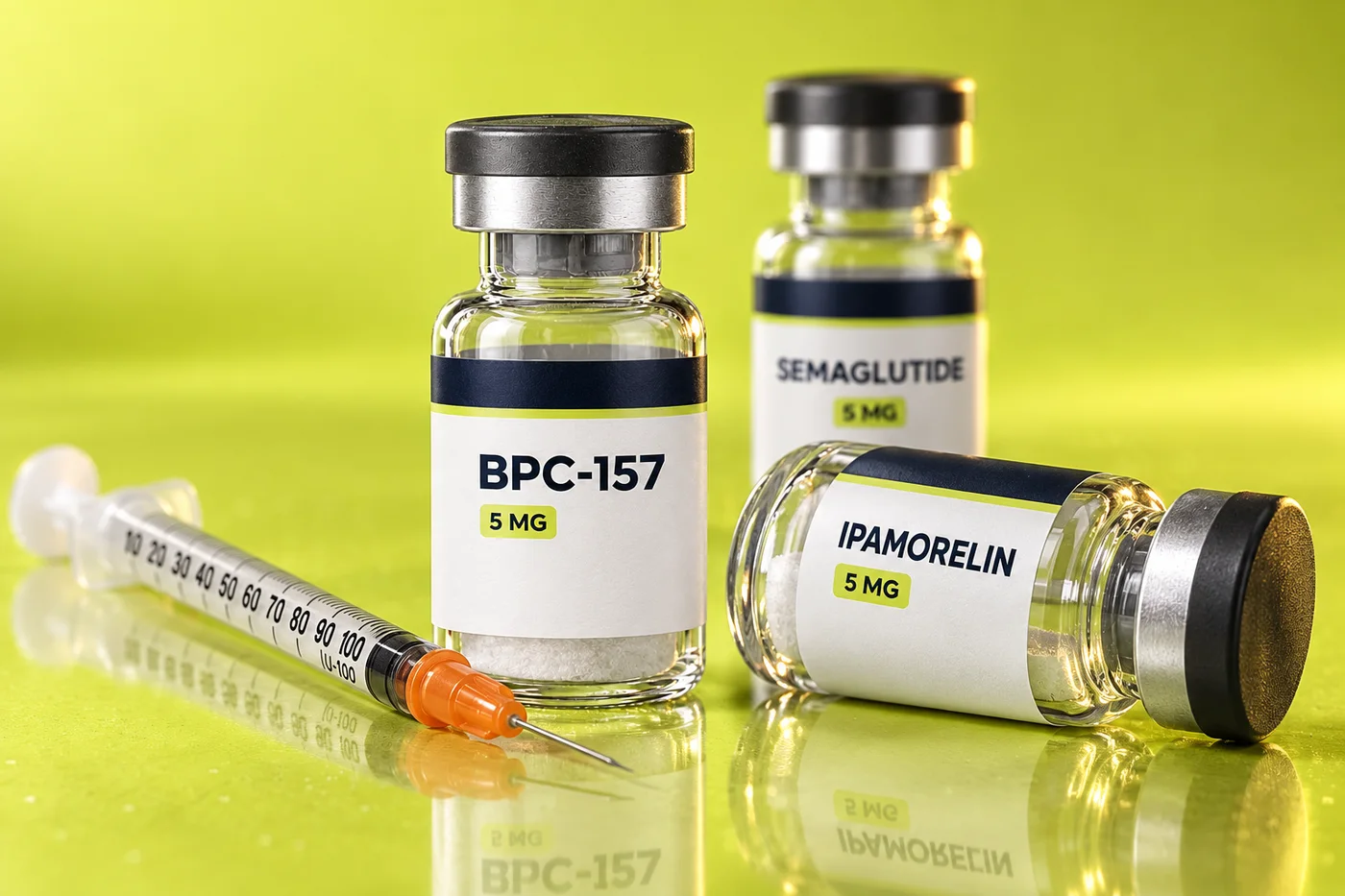
BPC-157 is the most popular peptide in the world and the least proven thing on this page, and both halves of that sentence are true at once. Three decades of rodent data report faster healing of tendon, muscle, bone and gut tissue, much of it from a single research group, and not one completed randomized human trial exists. The FDA placed it among bulk substances that may present significant safety risks in compounding and has stated it is not a dietary ingredient, which leaves it without a lawful route in either direction.
It is listed here rather than at number one because popularity is not evidence, and it is listed at all because pretending the most searched compound in the category does not exist would be its own kind of dishonesty. TB-500, MOTS-c, ipamorelin alone and every research-labeled vial sold beside them belong in the same tier for the same reason.
Who should ignore this
Most people reading a best peptides list are not shopping for a molecule. They are trying to solve something specific — weight that will not move, a tendon that has not healed in eight months, sleep that stopped working at forty, libido that changed — and a ranked list is a poor tool for that, because the correct answer depends on your labs, your history and what is actually wrong. The number one entry here is useless to someone with a shoulder injury, and the number seven entry is useless to almost everyone else.
The better move is to start from the goal and let the evidence narrow it, then have a licensed physician decide what belongs in your plan and what does not. That order also catches the cases where the honest answer is that no peptide is the answer, which no list ranked by search volume will ever tell you.
Questions people ask
What are the top 5 peptides?
What is the most effective peptide?
What peptides do celebrities use?
What is the best peptide for beginners?
Sources: NEJM — SURMOUNT-1 tirzepatide · NEJM — STEP 1 semaglutide · PubMed — tesamorelin and visceral fat